

Blog
Energy Storage Battery Pack Differentiation Design

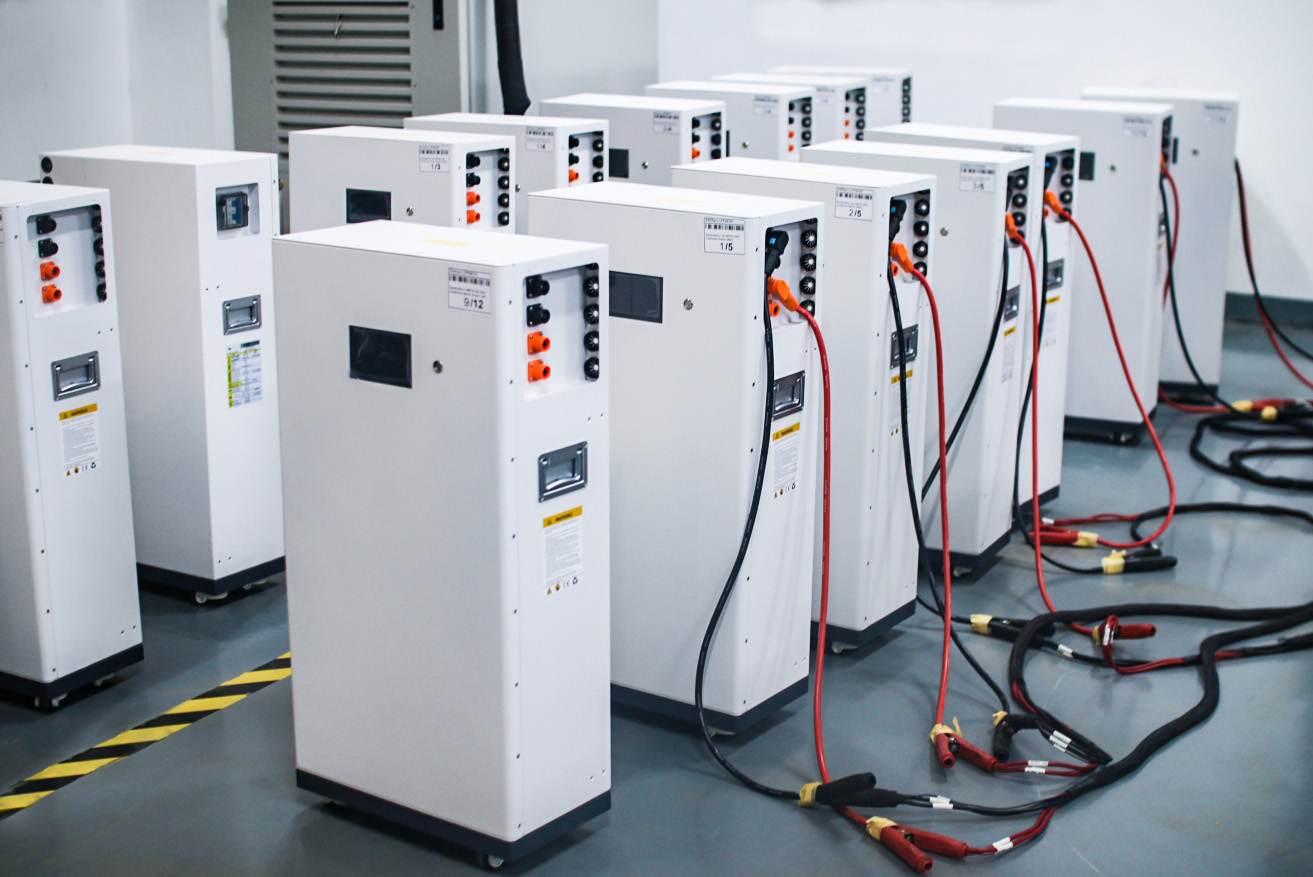
(Complete Technical Article)**
As a battery system manufacturer, EGbatt focuses on delivering safe, long-life, and cost-optimized energy storage battery packs for residential, commercial & industrial (C&I), and grid-level applications. Unlike EV battery packs that pursue extreme energy density and fast charging, energy-storage systems (ESS) require fixed installation, long-duration operation, environmental robustness, and high redundancy.
This article provides a structured design framework specifically for ESS battery packs.

1. Requirement Definition: Anchor to Energy Storage Scenarios
Energy storage applications differ significantly from EVs. Therefore, ESS battery pack design begins with scene-specific requirements rather than generic standards.
1.1 Scenario Segmentation
● Residential ESS (5–20 kWh)
- Compact size, silent operation
- High safety (non-flammable design)
- Supports on-grid/off-grid switching
- Compatible with 120/220/380V home power systems
EGbatt residential ESS example:
48V 100Ah Home Battery: https://egbatt.com/product/egbatt-48v-100ah-lifepo4-power-wall-lithium-ion-home-battery-ess-battery-5kwh/
● Commercial & Industrial ESS (50–500 kWh)
- High efficiency for peak-shaving
- Optimized LCOE (Levelized Cost of Energy)
- Compatible with solar/wind hybrid architectures
- Fast charge/discharge response for load management
Related product category:
https://egbatt.com/product-category/rack-mount-battery/
● Grid-scale ESS (MWh level)
- Cycle life 10,000–15,000+ cycles
- High reliability & redundancy
- Stable operation for frequency regulation and backup power
- Usually containerized systems (500–3000 kWh)
1.2 Key Quantitative Requirements
- Cycle life: 8,000–15,000 cycles (≥80% SOH)
- Calendar life: ≥10 years
- Temperature adaptation: −30°C to 55°C
- Ingress protection: IP65 for outdoor systems
- Safety: Compliant with GB/T 36276, UL 9540A
- Cost: BOM controlled within 0.5–1.0 RMB/Wh (core competitiveness)
2. Cell Selection: Long Life, Low Cost, High Safety
ESS does not require high energy density. The priorities are safety, cycle stability, and cost effectiveness.
2.1 Chemistry Selection
✔ LiFePO₄ (LFP) – The ESS Standard
- 10,000+ cycle life
- Highly stable (thermal runaway >200°C)
- Lower cost vs. NCM
- Suitable for all residential, C&I, and grid systems
EGbatt uses EVE, REPT, and CATL Grade-A LFP cells in all ESS battery products.
✔ Sodium-ion (Na-ion) – Growing Trend
- Very low material cost
- Excellent low-temperature performance
- Suitable for large-scale grid storage
✘ NCM (not preferred for ESS)
- Shorter cycle life
- Higher cost
- Mainly used in portable power systems
2.2 Cell Format & System Voltage Match
- Large-format prismatic cells (280Ah/320Ah/500Ah) → best for ESS
- Voltage configuration:
- Residential ESS: 48V (16S)
- C&I ESS: 200–800V
- Grid ESS: 600–1500V
Charging/discharging C-rate is usually 0.2C–1C, minimizing stress and cost.
3. Module & Pack Structure: Large Capacity, High Maintainability, Outdoor Adaptation
ESS battery packs operate continuously for years, making structure reliability and ease of maintenance critical.
3.1 Modular Topology (Recommended by EGbatt)
- Cell → module → pack structure
- Each module (5–20 kWh) is independently serviceable
- Avoid overly integrated EV-style CTP/CTC structures
- Maintenance cost significantly lower
3.2 Mechanical Protection for Long-Term Outdoor Use
- Material options:
- Galvanized steel with anti-corrosion coating (best for outdoor ESS)
- Aluminum alloy for indoor or weight-sensitive installations
- Protection:
- Full IP65 sealing
- Anti-salt-spray paint for coastal regions
- Pre-designed forklift slots & hanging points
3.3 Volume Expansion Management
- LFP cells expand 1%–2% during cycling
- Packs require 0.5–1 cm expansion clearance per module
4. Thermal Management: Low Power, High Uniformity
ESS has lower heat generation than EVs, but operates long-term under harsh environments.
4.1 Temperature Control Targets
- Cell temperature difference ≤8°C
- Charging prohibited below −5°C → pre-heat to above 5°C
- Above 45°C → cooling needed to avoid accelerated aging
4.2 Cooling Solutions
● Residential & low-power ESS
- Natural air cooling + auxiliary fans
- Low cost, low power consumption
● C&I & fast-response ESS
- Liquid cooling (water–glycol)
- Temperature accuracy ±2–3°C
- For 1C or higher charge/discharge
4.3 Thermal Runaway Isolation
- Fire-resistant partitions (rock wool / ceramic fiber)
- Aerosol fire suppression integration
- Temperature/smoke sensors with early warning
5. BMS Design: Long Life, Grid Coordination, Remote Monitoring
Energy storage BMS emphasizes accuracy, safety redundancy, and remote O&M.
5.1 Key Features
- SOC accuracy: ≤3%
- SOH estimation: ≤5%
- Balancing:
- Passive balancing (50–100 mA) for most ESS
- Active balancing optional for high-end C&I systems
- Grid compatibility:
- Modbus, CAN, IEC 61850
- Supports peak-shaving, demand response, microgrid modes
- Cloud monitoring:
- Voltage/temperature real-time upload
- Remote diagnostics and firmware updates
5.2 Reliability Enhancements
- Dual-redundancy MCU
- Insulation monitoring
- Low-power standby mode (<10W)
6. Cost & Maintainability Optimization
6.1 Cost Breakdown Optimization
- Cell cost >60% → use large-format prismatic cells
- Structure cost 15%–20% → standardized module sizes
- Thermal system 5%–10% → air cooling preferred for <50 kWh systems
6.2 Maintainability Design
- Front-access maintenance
- Replaceable modules without dismantling the entire pack
- Quick-disconnect harnesses
- Designed for second-life applications
7. Simulation & Validation: Long-Term Reliability as Priority
- Thermal simulation under extreme weather (−30°C / +55°C)
- Mechanical tests: vibration, corrosion, humidity
- Safety tests: overcharge, nail penetration, short-circuit
- Aging tests: 1000–2000 hours long-term cycling
- UL 1973 / UL 9540A / CE / UN38.3 compliance
