60kWh Deye High-Voltage LiFePO4 Battery Review: Will Prowse Tests 600VDC 60kWh Storage with Sol-Ark 60kW Inverter
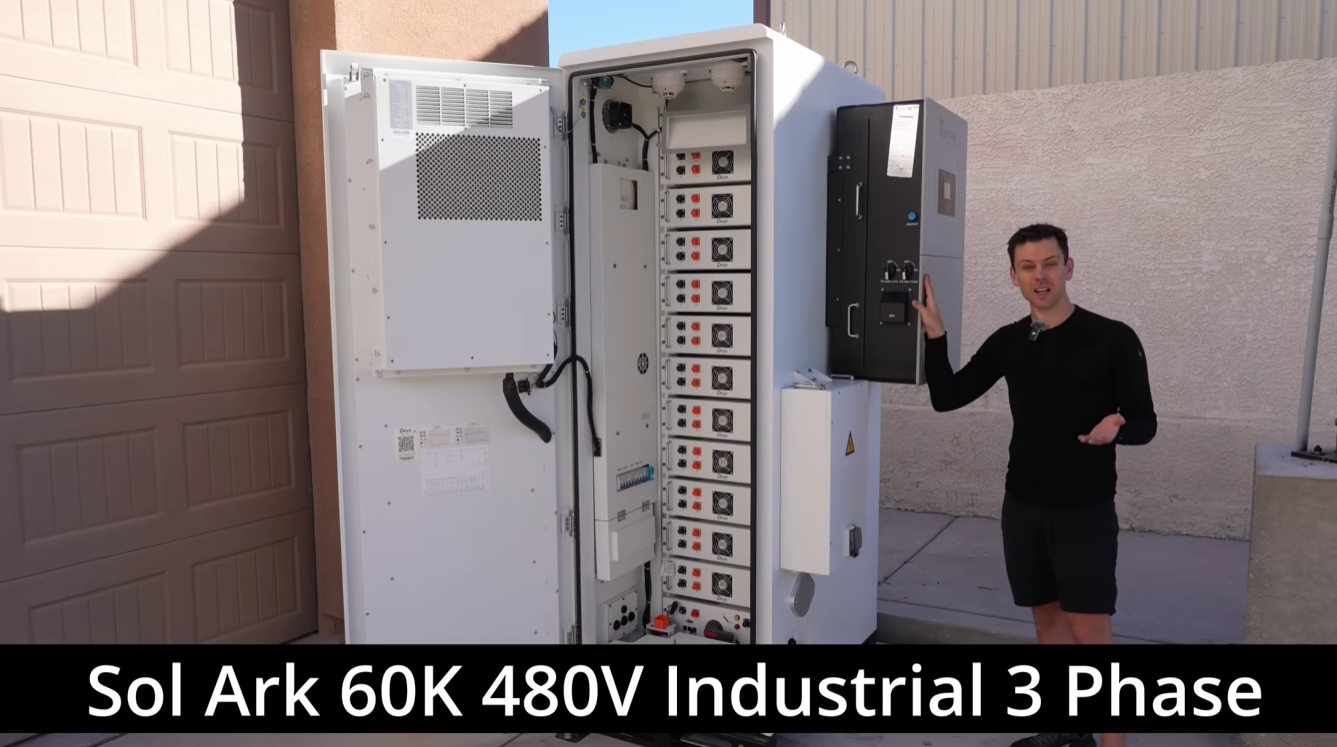
In December 2025, Will Prowse released a major video titled “60,000W 480V 3 Phase Sol Ark + 60kWh Deye LiFePO4 600VDC Battery Testing!”. This review examines a large-scale, high-voltage battery storage system: a 60kWh (actual ~61kWh) Deye LiFePO4 battery operating at 600VDC, paired with a Sol-Ark 60kW 480V 3-phase inverter.
This is not a typical residential 48V setup — it’s an industrial-grade high-voltage energy storage system designed for high-power applications.
Battery Storage System Overview
The centerpiece is the Deye 60kWh LiFePO4 battery cabinet:
- Rated capacity: 60kWh (Will measured ~61kWh total stored energy)
- Nominal voltage: 600VDC (high-voltage series configuration of multiple battery modules)
- Form factor: Single large cabinet on a pallet, temperature-controlled with an integrated heat pump (air conditioning system)
- Cooling system: Uses condenser coil, evaporator coil, ductwork, and individual fans to circulate cooled air through the battery modules — essential for maintaining optimal temperature in hot environments
- Safety features: Carbon monoxide detector, smoke detector, heat detector, automatic fire extinguisher, optional water sprinklers, and dual evacuation fans (top and bottom) to vent flammable gases if cells vent
The system steps down 480V 3-phase output to 240V via a 3000W transformer to power internal components like detectors and cooling fans.
Usable kWh and Discharge Limits
One of the most important kWh details Will highlights:
- In off-grid mode, the system is limited to discharging only down to 10% SOC (state of charge)
- This results in just ~6kWh usable energy out of the full 60–61kWh capacity during testing
- Full discharge from 100% to 10% SOC took significant time, with the battery successfully supplying power under heavy loads
- Charging time from empty to 100%: approximately 1.5 days (36 hours) under the tested solar input
This conservative 10% cutoff is a safety feature common in high-voltage commercial systems to protect cell longevity and avoid deep discharge risks.
Setup, Teardown & Internal Details
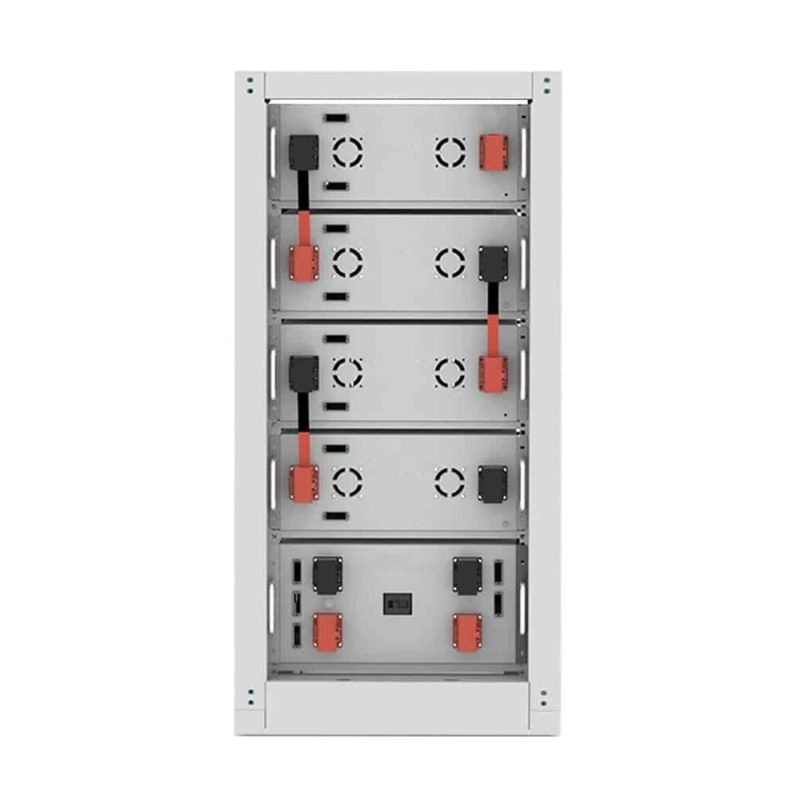
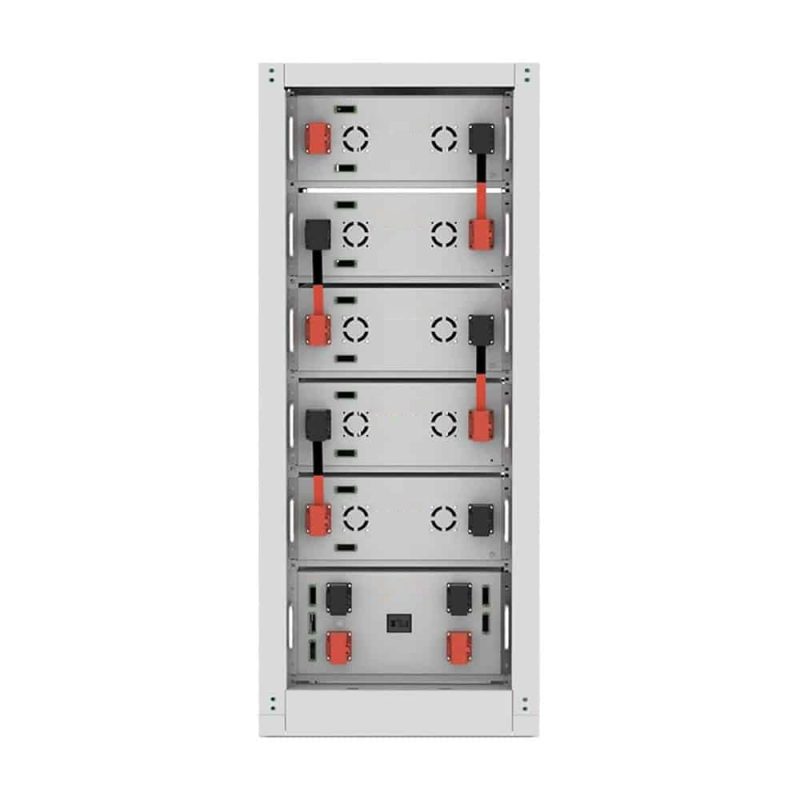
Will shows the battery cabinet internals: multiple LiFePO4 modules connected in series to reach 600VDC, communication cables, main disconnect switch, and high-voltage safety warnings.
The Sol-Ark 60kW inverter is compact (under 200 lbs) thanks to the high voltage/low current design — a key advantage over 48V systems that would require much thicker cables and larger components for the same 60kW output.
Load Testing and Performance Results
Will tested the system with large 480V loads (two 30kW heaters):
- Peak draw measured: 60.9 kW from the battery
- Initial problems: Overload errors, beeping alarms, battery over-current protection (default limit of only 20A), and startup surges causing contactor chatter
- Troubleshooting: Switched from grid-tie to off-grid mode, increased battery current limit to 100A, removed 80% SOC power limit
- After fixes: Successfully ran 60kW total load (one heater at a time, then both), assisted by ~5kW solar input
- Surge capability: Datasheet claims 90kW for 10 seconds; real-world testing showed limitations at full 60kW without solar support
- Cooling system performed well, keeping temperatures stable even under heavy discharge
The high-voltage design allows small-diameter cables and low current (around 100A at 600V for 60kW), making installation easier than equivalent 48V systems.
Pros and Cons of This 60kWh Battery Storage System
Pros:
- Massive 60–61kWh total capacity in a single cabinet
- High power output (60kW continuous, 90kW surge)
- Excellent thermal management with active heat pump cooling
- Comprehensive safety systems (detectors, auto-extinguisher, venting fans)
- Compact inverter size due to 600VDC architecture
- Low current reduces wiring costs and heat losses
Cons:
- Very limited usable kWh (~6kWh tested) due to 10% SOC cutoff in off-grid mode
- Complex setup requiring engineering-level troubleshooting
- High voltage (600VDC) presents serious safety risks
- Cooling system consumes extra power (1–2kW)
- Very expensive and industrial-grade — not practical for most residential users
- Long charge time (~36 hours from empty)
EGbatt Large-Capacity Alternatives
For users seeking high-capacity storage with better usable kWh ratios, EGbatt offers residential and commercial LiFePO4 systems in the 30kWh–60kWh+ range. Their high-voltage and stacked cabinet systems often allow deeper discharge (down to 5–10% SOC) while maintaining strong warranties and active cooling/heating options. EGbatt models typically deliver higher usable kWh percentages for off-grid homes or businesses compared to the conservative limits shown in this Deye test.
Final Verdict
Will concludes that the 60kWh Deye high-voltage battery + Sol-Ark 60kW system works well after proper configuration, successfully delivering up to 60.9kW and proving the capabilities of 600VDC storage. However, the extremely low usable capacity (~6kWh out of 61kWh) in off-grid mode, combined with setup complexity and safety considerations, makes it suitable mainly for commercial or industrial applications rather than typical home solar users.