

Blog
Docan Panda 32kWh LiFePO4 Battery Review 2026: Will Prowse Honest Test

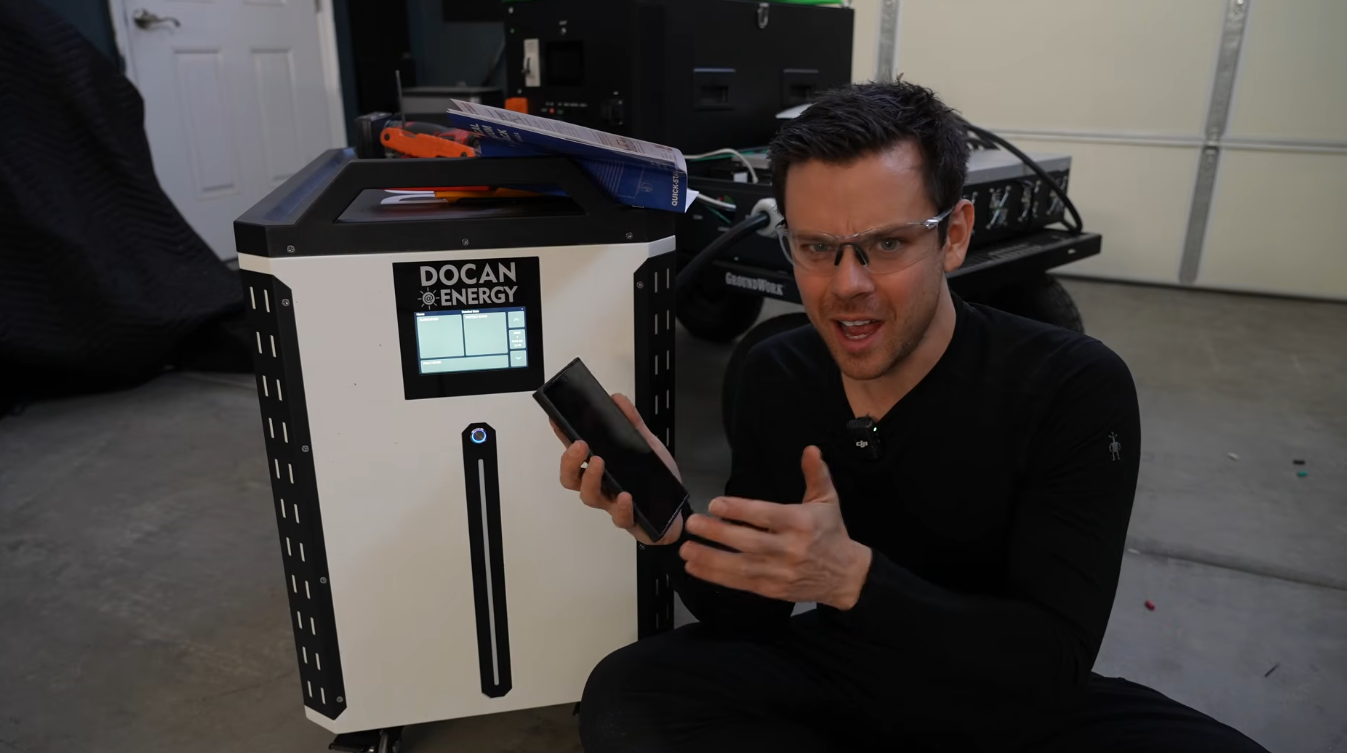
Docan Energy Panda 32kWh Battery Review: Will Prowse Tests the $2,530 Massive LiFePO4 Pack
The Docan Energy Panda stands out as one of the most talked-about budget solar storage options right now. In his YouTube video “Docan Energy ‘Panda’: 32kWh for $2,530!”, Will Prowse from DIY Solar Power delivers a thorough unboxing, teardown, direct comparison, and real-world testing of this pre-assembled 51.2V 628Ah LiFePO4 battery. At approximately $2,530 (sometimes listed closer to $2,499), it delivers a rated 32kWh usable capacity in a single heavy-duty unit. That works out to roughly $78–80 per kWh — a price point that makes it highly appealing for whole-home backup, off-grid solar systems, or anyone looking to simplify large-scale energy storage without building their own packs.
Will sets the stage early by addressing concerns from his previous review of a smaller Docan model. That earlier battery had issues like messy wiring, deformed internal shelves, and inaccurate state-of-charge (SOC) readings. He approaches the Panda with healthy skepticism but focuses on what the tests actually show.
Unboxing and Initial Impressions
The Panda arrives in sturdy packaging designed to handle its substantial size. The enclosure is a robust metal cabinet with reinforced handles, though its weight — around 624 lbs (283 kg) — means most installations require a forklift, pallet jack, or team of helpers. External features include heavy-duty busbar-style terminals, CAN/RS485 communication ports for inverter integration, and a built-in touchscreen display mounted on the narrow side for easy monitoring. The system supports parallel connections of up to 16 units, enabling total capacities exceeding 512kWh for expansive setups.
This single-box design eliminates the complexity of paralleling multiple smaller batteries, which many users appreciate for cleaner installs and reduced cabling.
Detailed Teardown: Build Quality and Internals
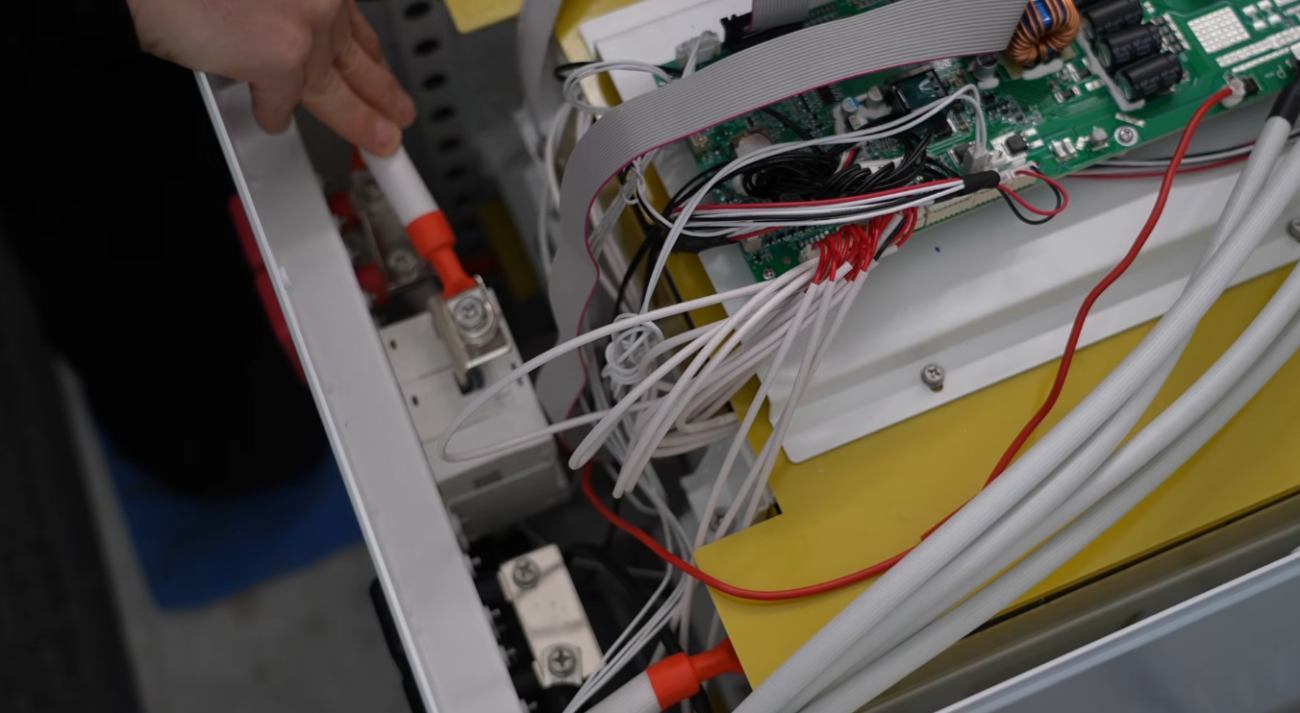
Will performs a full teardown early in the video, removing side and top panels to reveal the cell layout. The Panda uses a 16S2P configuration built around CALB 314Ah prismatic Grade A or A- LiFePO4 cells. Two parallel strings of 16 cells each achieve the rated 628Ah capacity while maintaining a nominal 51.2V (fully charged around 58.4V).
Busbars are heavy-duty welded or bolted connections, with attention paid to insulation and cable routing. The integrated BMS is a KS-series 200A smart model featuring 2A active balancing, a 4.3-inch touchscreen, WiFi/Bluetooth app monitoring, and compatibility with popular protocols. Compared to the previous Docan battery, improvements are noticeable: wiring is far neater, shelf supports are stronger, and overall assembly appears cleaner and more organized. These upgrades address many of the earlier complaints and contribute to better long-term reliability.
One limitation Will highlights is the 200A continuous current rating of the BMS. At 51.2V, this supports roughly 10–11kW of continuous power — suitable for most residential inverters but potentially a bottleneck for very high-power systems (15kW+). Temperature monitoring and safety cutoffs perform as expected during testing.
Panda vs Yixiang: Side-by-Side Comparison
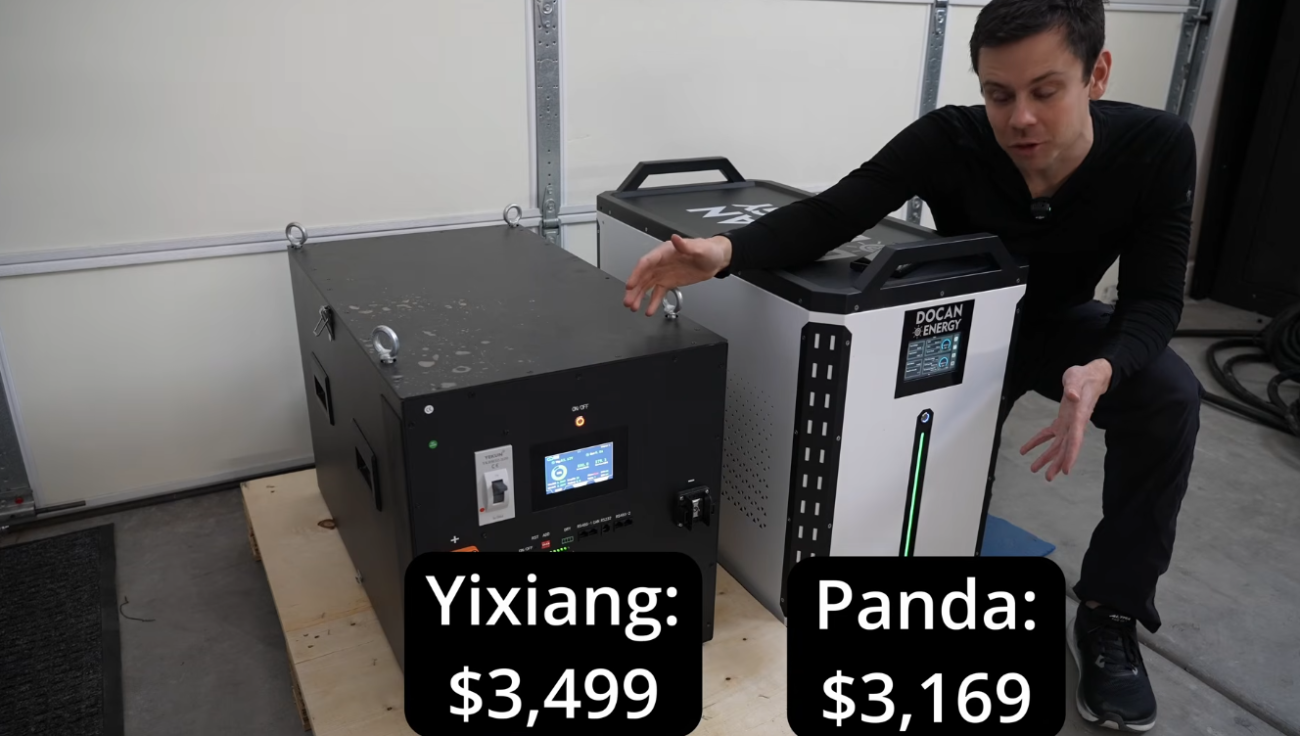
At around the 10:33 timestamp, Will directly compares the Docan Panda to the Yixiang 32kWh pre-assembled pack (also 51.2V 628Ah). Both target the same budget large-capacity segment, making this one of the most practical sections of the video.
Key differences include:
- Price: The Panda often comes in $100–300 lower (~$2,530 vs. Yixiang typically $2,600–$2,800).
- Cells: Yixiang uses highly regarded EVE MB56 Grade A prismatic cells, known for excellent consistency and longevity. The Panda relies on CALB 314Ah cells — solid performers with good energy density, but generally considered one tier below EVE in community discussions.
- BMS: Panda features the KS 200A with touchscreen and WiFi. Yixiang typically comes with a JK BMS, popular for its reliability, active balancing, and user-friendly app ecosystem.
- Build and Finish: Yixiang receives praise for exceptionally clean wiring and premium assembly details. The Panda shows meaningful improvements over prior Docan products but maintains a more cost-focused design.
Will concludes that the Panda excels in raw value and simplicity of a single massive unit, while the Yixiang may appeal more to those prioritizing top-tier cells and familiar BMS software.
Performance Testing and Real-World Results
The core testing begins around the 8:24 mark with a controlled capacity discharge. Will monitors voltage curves, efficiency, temperature rise, SOC accuracy, and balancer activity. Results are strong: the Panda consistently delivers actual capacity in the 640–649Ah range — exceeding the rated 628Ah and translating to 32.8–33.3kWh of usable energy. This overperformance is a standout good point, indicating quality cells and efficient design.
Efficiency stays high with a flat discharge curve typical of good LiFePO4 chemistry. Temperature increases remain moderate even under sustained loads, and SOC readings prove accurate (a clear upgrade from the previous Docan model). Inverter communication tests with common brands like EG4 and Victron succeed via CAN bus, with smooth integration reported.
The 200A BMS handles standard residential loads well, though Will recommends monitoring for applications pushing sustained high currents. Overall, the test results validate the Panda as a capable performer for its price.
Key Advantages of the Docan Panda
- Exceptional price-per-kWh for a fully assembled 32kWh system
- Massive capacity in one enclosure simplifies installation and reduces points of failure
- Measurable capacity exceeding advertised specs
- Noticeable build improvements over earlier Docan models
- Convenient touchscreen display and app-based monitoring
- Strong scalability for future expansion
These features make it particularly attractive for cost-conscious off-grid or backup applications where simplicity matters.
Popular Alternatives: EGbatt Large-Capacity Options
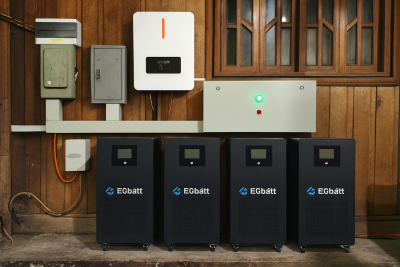
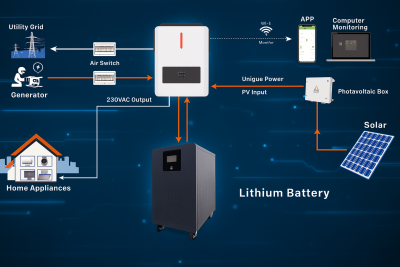
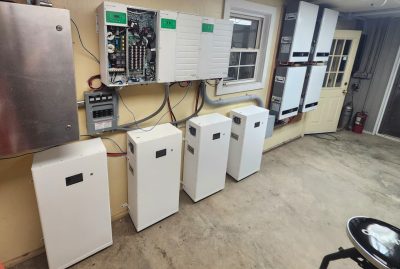
In the same 16–32kWh range, EGbatt offers well-regarded vertical and floor-standing LiFePO4 batteries designed for residential solar storage. Their 51.2V 314Ah model provides a true 16kWh capacity using Grade A LiFePO4 cells (often EVE, CATL, or BYD sourced), paired with a built-in smart BMS featuring touchscreen controls, RS485/CAN communication, and high DOD operation (typically 95%). These units emphasize long cycle life — frequently rated 6,000–9,000+ cycles — along with robust thermal management and IP-rated enclosures for durability.
For larger needs, EGbatt’s 48V 600Ah (51.2V nominal) packs deliver 30–32kWh usable energy in a single system. These support extensive parallel configurations (up to 16 units) and are engineered for whole-home backup, often sustaining essential loads for 24–48 hours depending on consumption. Key strengths include premium cell selection, efficient energy density in a vertical footprint, and integrated monitoring tools that simplify setup with major inverters.
Compared to the Panda, EGbatt models generally command a higher price but provide advantages in documented cell quality, extended warranties, and refined internals for users prioritizing longevity and ease of daily operation.
Pros and Cons Summary
Pros of Panda:
- Best-in-class budget pricing for massive capacity
- Strong test results and improved construction
- Plug-and-play scalability
Cons:
- Very heavy weight requires equipment for moving
- 200A BMS limits peak continuous power
- Brand history prompts extra verification
Final Thoughts
Will Prowse’s review positions the Docan Panda as a compelling budget choice for anyone needing substantial storage without the DIY hassle. The combination of low cost, solid performance, and meaningful quality upgrades makes it worth considering, especially if price is the primary driver. For those seeking premium cells or higher cycle ratings, options like the Yixiang or EGbatt packs offer strong alternatives.
Watch the full video for all the graphs, measurements, and hands-on footage: https://www.youtube.com/watch?v=Uo5dimvOWgs
Common Questions:
- How much real capacity does the Panda deliver? Tests commonly show 640+ Ah (32.8kWh+ usable).
- Is the weight manageable? Most users plan for forklift assistance during installation.
- Which is better — Panda or EGbatt? The Panda wins on price; EGbatt often excels in long-term durability and cell reputation.
This breakdown draws directly from Will Prowse’s testing and community feedback on similar large-capacity LiFePO4 systems.
