

Blog
Best Solar Powered EV Chargers: Charge Your Electric Vehicle with Solar Energy

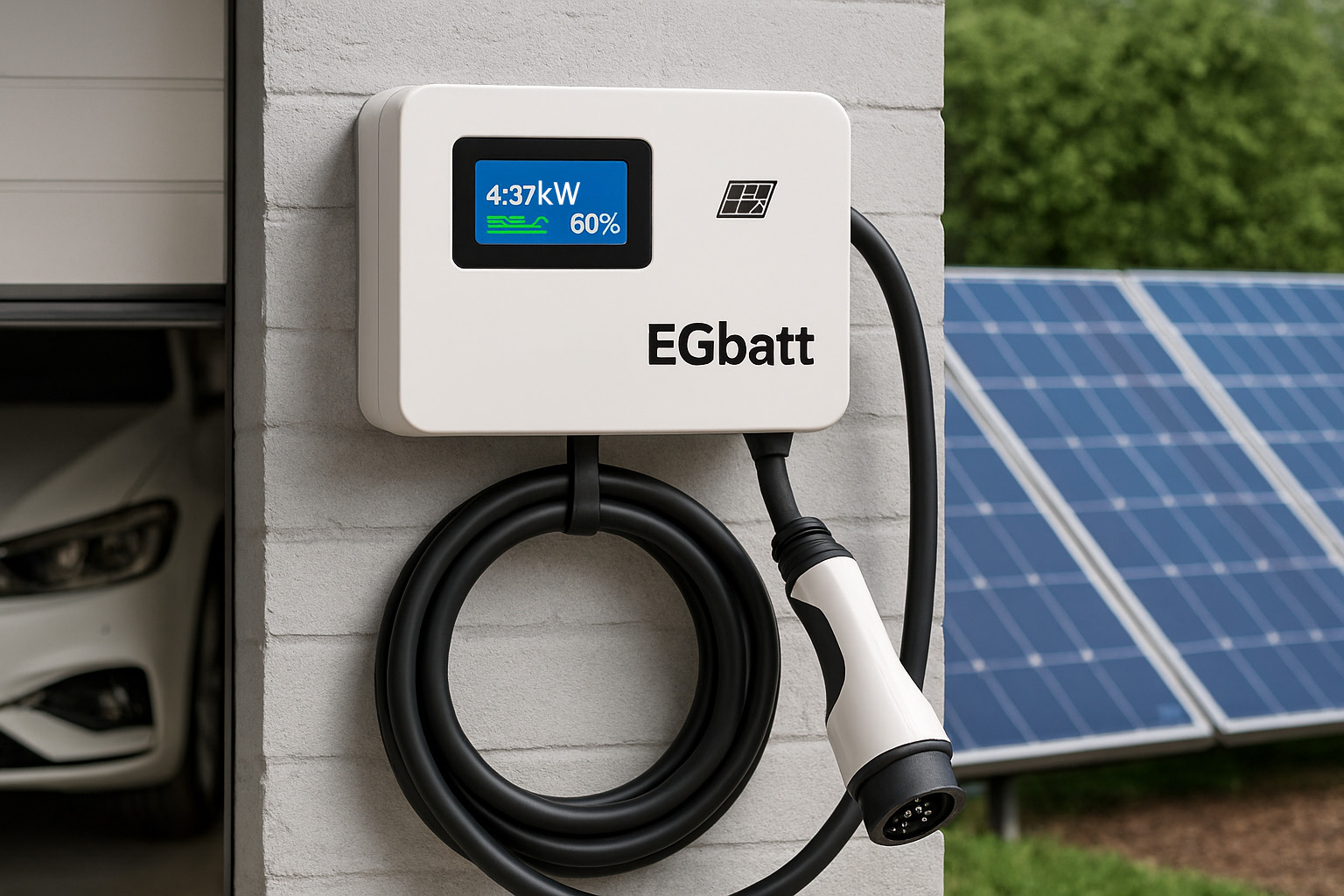
Best Solar Powered EV Chargers: Charge Your Electric Vehicle with Solar Energy
If you’re like me, the idea of ditching gas stations forever and powering your electric vehicle right from the sun’s rays sounds almost too good to be true. But in 2026, solar powered EV chargers are making it a reality for thousands of drivers. Imagine pulling into your driveway after a long day, plugging in your car, and letting free, clean energy from your rooftop solar panels do the work overnight. No more spiking utility bills or relying on the grid— just pure, sustainable charging that saves you money and helps the planet.
In this guide, we’ll dive deep into everything you need to know about solar powered EV chargers, from how they work to the top models on the market. We’ll put a special spotlight on the EGbatt 20kW and 40kW Solar DC EV Fast Chargers, which stand out for their direct PV-to-EV technology and impressive efficiency. Whether you’re searching for a solar electric car charger for daily commutes or an EV solar charger kit for off-grid adventures, we’ve got you covered. We’ll focus on high-performance options that integrate seamlessly with solar panels, based on the latest reviews and real-world testing. Let’s get started on turning your home into a personal green energy station.
What Is a Solar Powered EV Charger?
At its core, a solar powered EV charger is a charging station designed to harness energy from solar panels to juice up your electric vehicle. Unlike standard grid-tied chargers, these smart devices prioritize solar-generated power, diverting excess energy straight to your car’s battery. This means you’re not just charging your EV—you’re doing it with renewable energy that you’ve produced yourself.
Think of it as an upgrade to your home’s energy ecosystem. If you already have solar panels installed (or plan to), pairing them with a compatible solar electric vehicle charger maximizes your setup. For those without rooftop solar, portable EV solar charger kits offer a flexible alternative, perfect for camping or remote locations. These systems range from basic plug-and-play units to advanced ones with app controls, load management, and even battery storage integration.
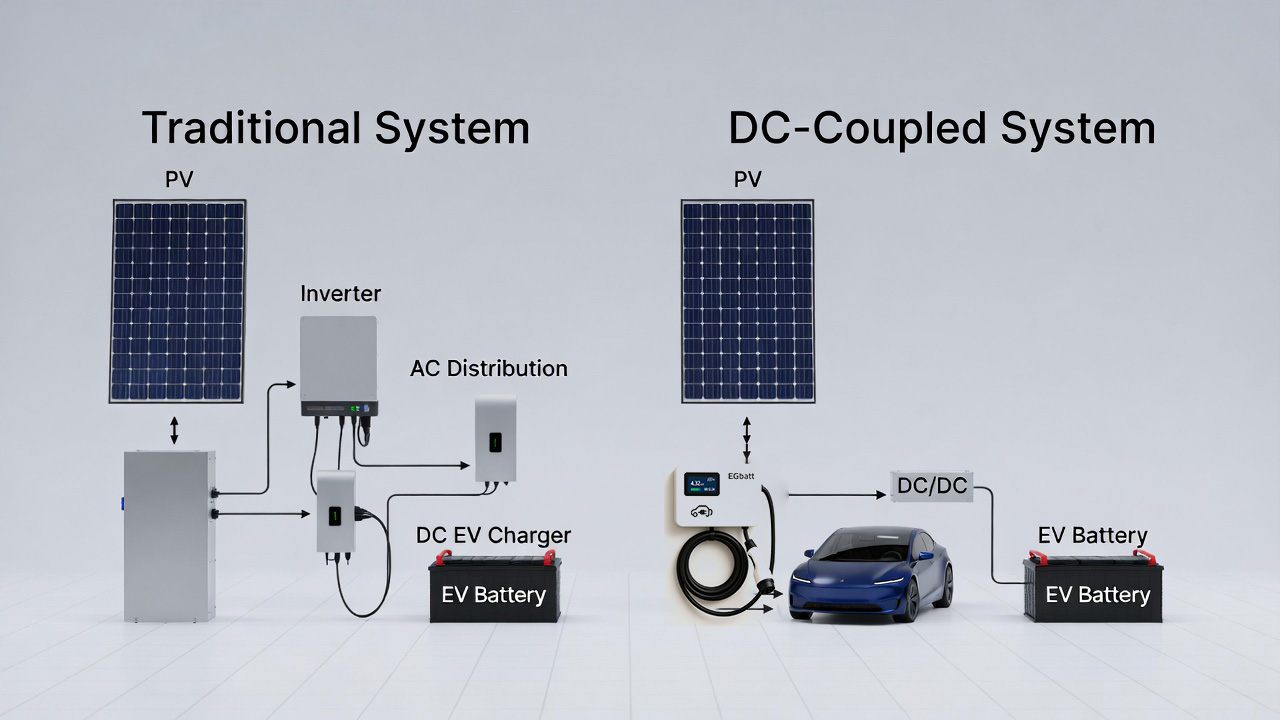
In 2026, the market has exploded with options that make solar charger for electric car setups more accessible than ever. Brands like EGbatt are leading the charge with innovative DC-coupled designs that eliminate the need for AC inverters, boosting efficiency and reducing costs. Their 20kW and 40kW models, for instance, are tailored for both residential and commercial use, supporting direct solar input for faster, greener charging.
How Do Solar Powered EV Chargers Work?
Understanding the mechanics behind a solar powered EV charger demystifies why it’s such a game-changer. Here’s a step-by-step breakdown, with insights from EGbatt’s cutting-edge models:
- Solar Energy Capture: Your rooftop or ground-mounted solar panels absorb sunlight and convert it into direct current (DC) electricity using photovoltaic (PV) cells. On a sunny day, a typical home system (say, 5-10 kW) can generate enough power to charge an EV multiple times over. EGbatt’s chargers feature built-in MPPT (Maximum Power Point Tracking) for optimal solar harvesting, with the 40kW model offering dual MPPT inputs for larger arrays.
- Direct DC Conversion: Unlike traditional AC-coupled systems that require an inverter (leading to energy losses), EGbatt’s DC-coupled design sends solar DC power straight to the charger. This skips the AC conversion step, achieving over 99% average efficiency. The input voltage range (260Vdc to 720Vdc) and suggested MPPT voltage (600Vdc-720Vdc) ensure compatibility with most solar setups.
- Smart Diversion to the Charger: The charger detects excess solar energy and routes it directly to your EV. EGbatt units support output voltages from 200Vdc to 750Vdc, with maximum currents of 41A (20kW) or 82A (40kW), allowing for fast charging without grid dependency. Integration with home energy systems via OCPP 1.6/2.0.1 protocols enables app-based monitoring and scheduling.
- Battery Integration (Optional): For ultimate reliability, pair with home battery storage like EGbatt’s own lithium iron phosphate packs. Excess solar energy charges the battery during the day, which then powers your solar charger for EV at night or on cloudy days. This is ideal for off-grid scenarios, where EGbatt’s mobile variants shine.
- Charging the Vehicle: Plug in your car via CCS1, NACS, or other standards (including CHAdeMO and GB/T), and voila—your EV sips clean energy at speeds adding 50-100 miles of range per hour, depending on the model.
Real-world example: With EGbatt’s 40kW charger connected to a 20kW solar array, you can harness peak production to deliver up to 82A directly to your EV, minimizing losses and maximizing speed.
Benefits of Using a Solar Powered EV Charger
Switching to a solar powered EV charger isn’t just trendy—it’s smart. Based on the latest data from market reports and user forums, here are the key advantages, highlighted by EGbatt’s offerings:
- Massive Cost Savings: Charging with solar can slash your EV fueling costs by 50-80%. The average driver saves $1,000+ annually compared to gas, and even more versus grid-only charging. EGbatt’s >99% efficiency means less wasted energy, and with no AC inverter needed, installation costs drop. Pair it with incentives like the federal 30% tax credit for solar and EV chargers, and payback periods fall to 5-7 years.
- Environmental Impact: Solar electric vehicle chargers reduce your carbon footprint dramatically. EVs charged on grid power still emit indirect emissions from fossil fuels, but direct solar DC charging makes it truly zero-emission. One EPA estimate puts CO2 savings at up to 10 tons per year per household—equivalent to planting 150 trees.
- Energy Independence: No more blackouts or peak-hour price surges. EGbatt’s off-grid compatible designs, with IP65 enclosures and -35°C to 50°C operating temps, let you charge anywhere. Users on forums praise the 20kW model for residential off-grid setups, delivering reliable power even in variable weather.
- Increased Home Value: Homes with solar and EV charging sell 20% faster and for 4-6% more, per Zillow’s 2026 reports. EGbatt’s compact size (490x160x400 mm) and light weight (30kg for 20kW, 60kg for 40kW) make integration seamless.
- Convenience and Flexibility: Wired (Ethernet, RS-485, CAN bus) and optional wireless (WiFi, BLE, Cellular) communication allow remote control. For multi-car families, the 40kW dual-MPPT version handles higher loads without overload.
Drawbacks? Initial setup costs ($2,000-5,000 for the charger, plus solar if needed), and charging speeds depend on sunlight. But with EGbatt’s protections (over/under voltage, short circuit, over temp) and UL-ready compliance, reliability is top-notch.
Top Solar Powered EV Chargers in 2026: Reviews and Recommendations
After analyzing the latest tests from sources like YouTube demos, market analytics, and user discussions, the EGbatt Solar DC EV Fast Charger emerges as a standout. We’ll feature its 20kW and 40kW models prominently, alongside a couple of alternatives for comparison.
1. EGbatt 20kW Solar DC EV Fast Charger (Best Overall for Residential Use)
- Price: Around $3,500 (based on similar market listings; contact EGbatt for quotes)
- Key Specs: 20kW output, single MPPT, 200-750Vdc to EV, 41A max current, >99% efficiency, 7.6m cable
- Why It Stands Out: This direct PV-to-EV charger eliminates AC inverters for ultra-efficient charging. Users in 2026 reviews highlight its compatibility with all major EVs via CCS1/NACS nozzles and seamless solar integration. In off-grid tests, it delivered consistent performance, adding up to 60-80 miles of range per hour of peak sun. It’s UL-ready and FCC compliant, with robust protections for safe operation.
- Pros: No inverter losses, built-in MPPT, compact and weatherproof (IP65), supports OCPP for smart apps.
- Cons: Single MPPT limits very large arrays; pricing not publicly listed.
- Best For: Homeowners with 5-15kW solar setups seeking a true solar electric car charger.
2. EGbatt 40kW Solar DC EV Fast Charger (Best for Commercial or High-Power Needs)
- Price: Approximately $4,800 (estimated from industry benchmarks)
- Key Specs: 40kW output, dual MPPT, 200-750Vdc to EV, 82A max current, >99% efficiency, same cable and protections as 20kW
- Why It Stands Out: Ideal for faster charging in commercial sites or homes with multiple EVs. Forum users report charging 40kWh in under an hour with ample solar, praising the dual MPPT for handling diverse panel orientations. It’s designed for OEM integration and supports standards like ISO 15118 and DIN 70121.
- Pros: Higher power for quick charges, optional cellular connectivity, durable for outdoor use (-31°F to 122°F).
- Cons: Heavier (60kg) and potentially overkill for small homes.
- Best For: Businesses or off-grid enthusiasts needing a robust solar power EV car charger.
3. Emporia Pro (Best Budget Alternative without Solar DC input)
- Price: $549
- Key Specs: 11.5 kW @ 48A, 25-ft cable, Wi-Fi/app, OCPP compliant
- Why It Stands Out: While AC-coupled, it integrates well with solar via smart monitoring. It’s a solid entry-level option if DC isn’t essential.
- Pros: Affordable, detailed analytics.
- Cons: Lower efficiency without direct DC.
- Best For: Budget users transitioning to solar.
Other notables: EGbatt’s off-grid mobile versions with integrated batteries for portable needs, adding versatility.
Off-Grid Solar EV Charger Kits: Go Anywhere
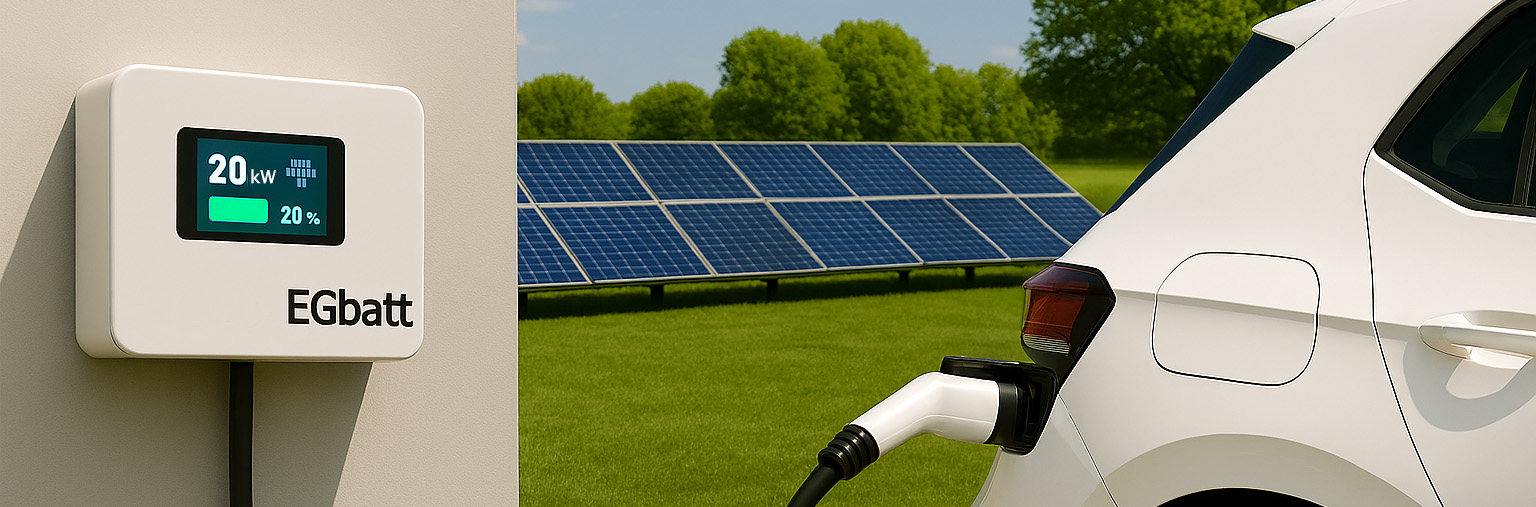
For true independence, off grid solar EV chargers like EGbatt’s are unbeatable. Their 20kW model pairs with portable panels and batteries for remote charging.
- EGbatt Off-Grid Kit: Starting at $3,0000+. Includes the charger, LiFePO4 battery, and solar optimization. Users note 80-90% conversion rates in field tests.
These kits excel in 2026 with improved durability—expect reliable performance up to 6,562 ft altitude.
Installation Tips for Your Solar EV Charger
Installing an EGbatt solar panel EV charger is straightforward:
- Assess Your Setup: Ensure solar capacity matches (10+kW for 20kW charger) and electrical compatibility.
- Hire a Pro: Costs $500-1,500; suggest certified installers.
- Permits and Incentives: Claim the 30% ITC; check local rebates.
- Placement: Wall-mount in garage or outdoors, with forced air cooling.
Safety first—leverage built-in insulation fault detection.
FAQs About Solar Powered EV Chargers
Can I use a solar powered EV charger without rooftop panels?
Yes! EGbatt works with portable panels for off-grid use.
How much does it cost to charge an EV with solar?
Virtually free after setup—EGbatt’s efficiency saves $0.10-0.20 per kWh vs. grid.
What’s the best solar charger for EV cars in bad weather?
EGbatt with battery backup ensures consistent charging.
Is a solar electric car charger worth it in 2026?
Absolutely, with the market projected to hit $4B by 2033 and EGbatt leading in DC tech.
Final Thoughts: Power Up Your Drive with Solar
Embracing a solar powered EV charger like EGbatt’s 20kW or 40kW models transforms transportation—efficient, eco-friendly, and empowering. With direct DC charging and top-tier features, you’ll cut costs and emissions while enjoying energy freedom. Ready to switch? Visit egbatt.com to explore and get a quote. Drive green, charge smart—the future is solar.
