

Blog
Why More EV Charging Stations Are Starting to Use Battery Storage

Why More EV Charging Stations Are Starting to Use Battery Storage
A few years ago, most EV charging stations were designed in a relatively simple way.
Grid power comes in. Chargers are installed. Vehicles charge directly from the utility connection.
That model still works in many locations.
But once charging power starts increasing — especially in commercial fast charging projects — infrastructure problems appear very quickly.
In many cases today, the limitation is no longer the charger itself.
It is the grid connection behind it.
—
Fast Charging Creates Extremely High Short-Term Power Demand
DC fast charging looks manageable when only one vehicle is charging.
The situation changes completely once multiple chargers operate at the same time.
For example:
- 4 vehicles charging at 150kW
- 2 vehicles charging at 250kW
- a fleet depot starting simultaneous overnight charging
The total site load can suddenly reach hundreds of kilowatts or even several megawatts.
And unlike factories or office buildings, EV charging demand is often highly unpredictable.
Power spikes happen fast.
That creates several problems for charging operators:
- very high peak demand charges
- larger transformers
- grid upgrade requirements
- utility approval delays
- higher infrastructure cost
In some projects, utility infrastructure upgrades can cost more than the chargers themselves.
—
Battery Storage Changes the Entire Power Profile
This is where battery storage starts becoming extremely useful.
Instead of pulling all charging power directly from the grid in real time, the charging station can partially use locally stored energy.
The effect is surprisingly significant.
Rather than forcing the grid to instantly deliver huge power spikes, the battery system smooths energy demand over time.
The charging station effectively becomes:
a controlled energy management system instead of a direct grid load.
—
Peak Shaving Is Becoming One of the Biggest Reasons
One term appearing more frequently in EV infrastructure projects is “peak shaving.”
This simply means reducing short-duration power spikes that trigger expensive utility demand charges.
Many utilities do not only charge for total electricity consumption.
They also charge based on the highest power demand reached during short periods.
That is a major issue for fast charging sites.
A charging station may only experience high demand occasionally, but those short peaks can dramatically increase monthly electricity costs.
Battery storage helps reduce those spikes.
Energy can be slowly stored from the grid during lower demand periods, then discharged rapidly during vehicle charging peaks.
In many commercial charging projects, this becomes one of the most important economic advantages.
—
Weak Grid Areas Are a Much Bigger Problem Than Many People Realize
One thing becoming increasingly obvious globally is that many regions simply do not have strong enough electrical infrastructure for large-scale EV charging expansion.
This is especially common in:
- industrial zones
- remote areas
- developing markets
- temporary infrastructure projects
- older commercial districts
Sometimes the local grid connection technically exists, but available capacity is limited.
Installing several high-power chargers may require:
- new transformers
- substation upgrades
- new medium-voltage connections
- long approval processes
Battery-buffered charging systems help work around these limitations.
Instead of designing infrastructure only around instantaneous grid power availability, the system manages energy more flexibly.
—
Solar Integration Works Better Once Storage Is Added
Battery storage also changes how solar energy can be used inside EV charging infrastructure.
Without storage, solar charging has a major limitation:
energy generation and vehicle charging demand rarely match perfectly.
Vehicles may arrive:
- at night
- during cloudy conditions
- during periods of low solar production
Battery storage helps decouple energy generation from charging time.
Solar energy produced during the day can be stored locally and later used for vehicle charging.
This becomes even more efficient in DC-coupled systems where:
solar → battery → EV charging
can operate with fewer conversion stages.
Related architecture:
Solar DC EV Charging System
—
The Economics Start Changing at Larger Scale
At smaller charging sites, battery storage may not always be necessary.
But once charging infrastructure starts scaling up, economics change very quickly.
Operators begin optimizing for:
- grid capacity cost
- demand charges
- site scalability
- power stability
- renewable energy utilization
At that point, the charging station is no longer simply a charger installation project.
It becomes an energy infrastructure project.
—
Battery-Buffered Charging Is Quietly Becoming Common
Many charging operators are now deploying battery-buffered systems even when full grid connections are available.
Not because the grid is absent.
But because infrastructure optimization increasingly matters.
Battery systems help:
- reduce infrastructure upgrades
- improve charging stability
- support higher charging output
- integrate renewable energy
- improve site scalability
This is one reason why integrated charging and storage systems are becoming more common in modern charging deployments.
Related system:
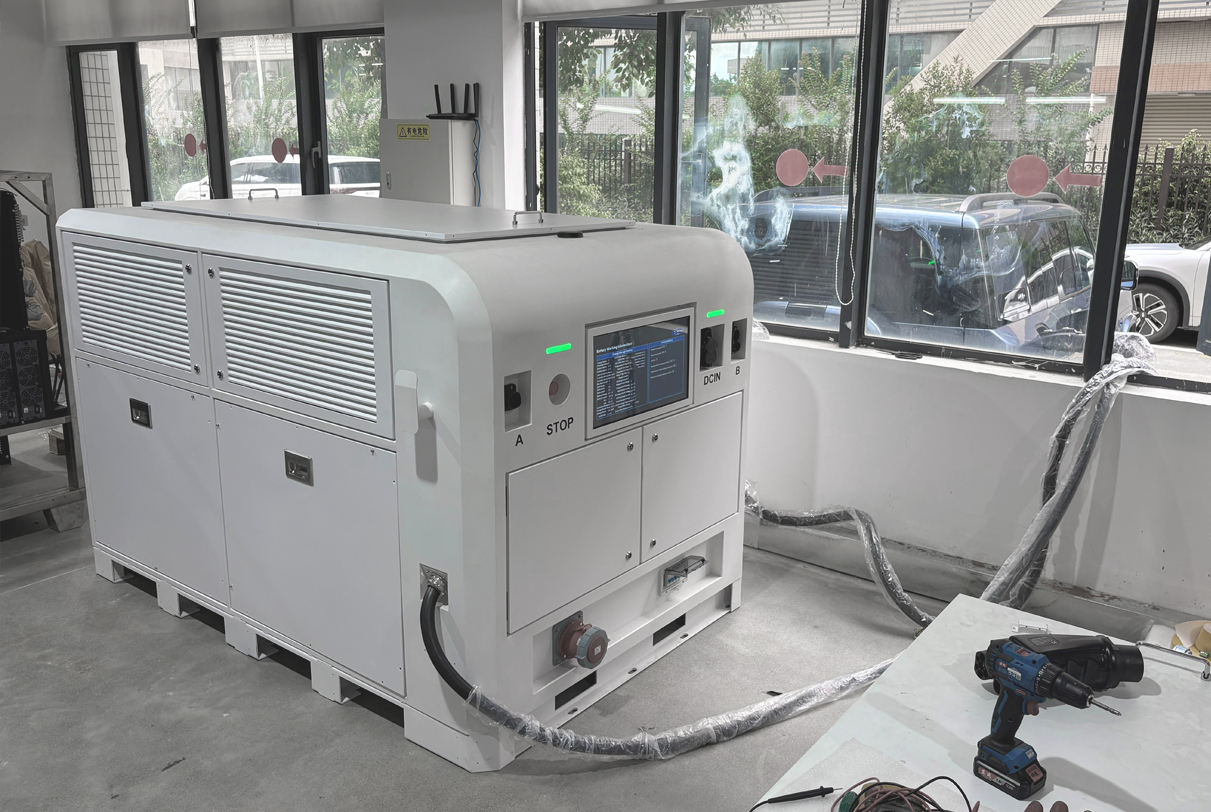
Battery Buffered EV Charging System
—
The Industry Is Gradually Moving Beyond “Just Chargers”
One noticeable shift happening across the EV infrastructure industry is that charging systems are becoming part of larger distributed energy networks.
Charging stations are increasingly expected to:
- manage power dynamically
- interact with renewable energy
- support local storage
- operate under grid constraints
- optimize energy cost
In other words, the future charging site looks less like a standalone charger and more like a localized energy platform.
—
Final Thoughts
Battery storage is becoming important in EV charging not simply because batteries are popular, but because high-power charging creates real infrastructure and energy management challenges.
As charging demand grows, especially in commercial and fast charging applications, energy storage helps solve problems related to grid limitations, peak demand, renewable integration, and infrastructure scalability.
That is why battery-buffered charging systems are likely to become an increasingly common part of future EV charging infrastructure.
