Blog
2026 Guide to Commercial EV Charging Stations: ROI, Trends & Smart Solutions

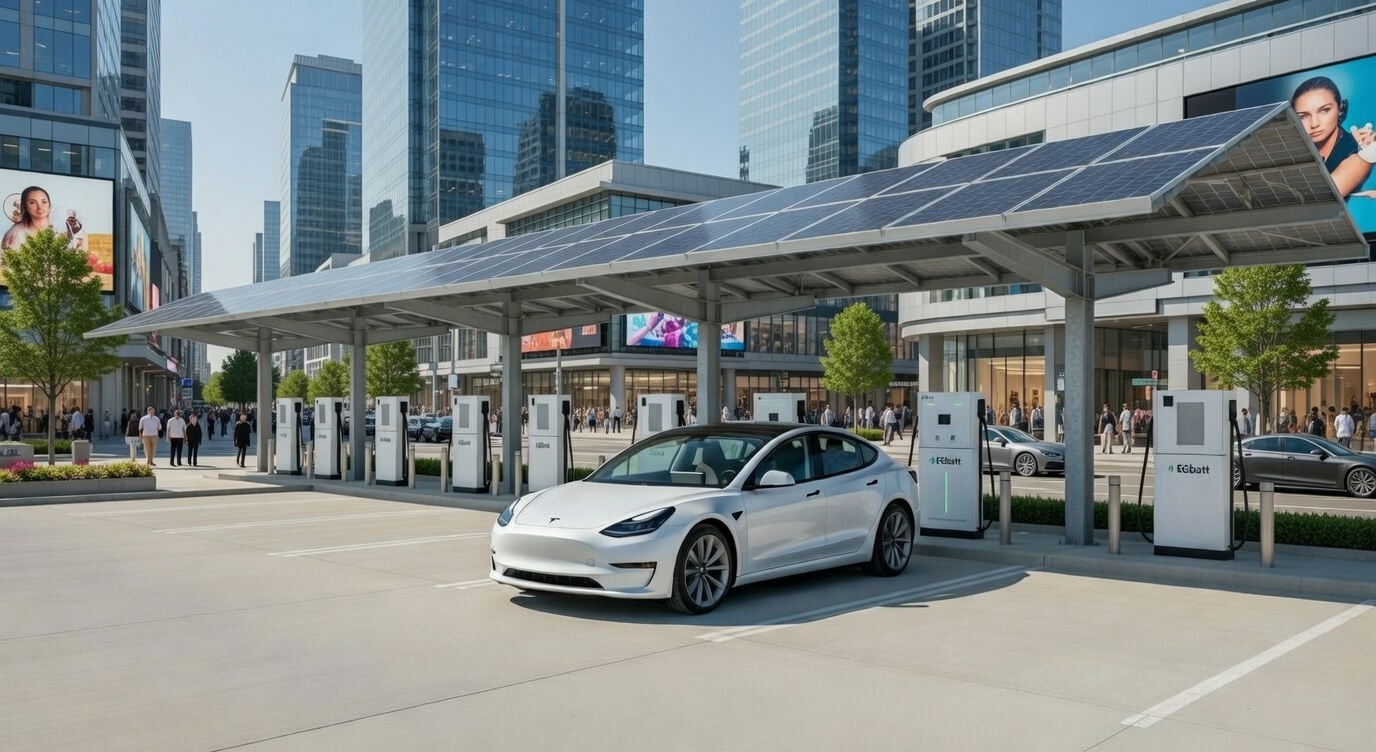
The electric vehicle revolution has reached a critical inflection point for commercial decision-makers. With the global electric vehicle charging station market reaching USD 55.78 billion in 2026 and projected to grow at a 20.85% CAGR through 2031 -9, businesses can no longer treat EV charging as a pilot program or sustainability checkbox. It has become a competitive necessity that directly impacts customer acquisition, employee retention, fleet operating costs, and property asset values -3.
According to Huawei's 2026 Charging Network Industry Trends report, the sector remains in its "early stage of wave-based development" with immense room for growth -1. For commercial customers—retail centers, office parks, fleet operators, and industrial facilities—understanding the latest financial models, technology trends, and implementation strategies is essential for capturing value in this rapidly evolving landscape.
This guide delivers data-driven insights specifically for commercial buyers, incorporating 2026 market projections, technology trends, and ROI analysis to help you make informed investment decisions.
The commercial EV charging infrastructure market is experiencing unprecedented expansion. Key 2026 market data includes:
Global market value: USD 55.78 billion (2026), up from USD 46.13 billion in 2025 -9
Projected 2031 value: USD 143.76 billion -9
Compound annual growth rate (CAGR) : 20.85% through 2031 -9
Commercial vehicle segment growth: Fastest-growing category at 52.20% CAGR -9
DC charging station growth: 53.10% CAGR, driven by demand for faster charging sessions -9
Asia-Pacific currently dominates with 60.10% market share, supported by China's 12.82 million public connectors and 25% annual installation growth -9. However, Europe shows the fastest regional growth at 40.50% CAGR through 2031, driven by EU regulations and cross-border network alliances -9.
BTC POWER's 2026 industry survey of 200+ commercial EV charging decision-makers reveals a fundamental shift: charging infrastructure is now a competitive necessity, not just a sustainability mandate -3. Organizations are moving beyond pilot programs to full-scale deployment, driven by:
Fleet electrification mandates from logistics giants
Employee and customer expectations for on-site charging
Regulatory requirements including ICE-ban timelines
Financial imperatives from falling battery costs and rising grid electricity prices -9
Huawei's January 2026 Charging Network Industry Trends report identifies ten transformative trends that commercial buyers must understand -1-5:
| Trend | Commercial Impact |
|---|---|
| High-Quality Development | Legacy charger upgrades required; "quality delivers high returns" |
| Full Ultra-Fast Charging | 800V+ architecture becoming standard; future-proofing essential |
| Logistics Megawatt Charging | Heavy truck electrification creating new demand patterns |
| 100MW+ Depot Sites | Large-scale charging hubs becoming standard for high-throughput operations |
| Safety & Reliability | Higher power levels demand robust safety systems |
| Liquid-Cooled Ultra-Fast Charging | Essential for harsh environments; replacing air-cooled systems |
| DC-Coupled Storage + Charging | Grid capacity expansion without utility upgrades |
| Modular Station Construction | Flexible, scalable, relocatable solutions |
| Campus Microgrids | Integrated PV + storage + charging for energy independence |
| AI-Powered Networks | Cloud-vehicle-station-charger optimization for efficiency |
These trends underscore a clear message for commercial customers: the era of simple, standalone charging stations is over. Today's investments must account for integration with storage, grid interactivity, and intelligent management systems.
Commercial EV charging stations offer multiple revenue pathways -7:
Pay-per-use charging: Set rates per kWh or per session
Time-based billing: Premium pricing during peak demand periods
Membership/subscription models: Recurring revenue from frequent users
Tiered pricing: Different rates for public vs. employee/fleet charging
With EV adoption accelerating, charger utilization rates are projected to rise significantly in 2026, directly improving monthly returns -7.
For retail locations, the financial benefit extends beyond direct charging revenue. Global studies consistently show that EV drivers spend 20-30% more at businesses with on-site charging -7. This "dwell time dividend"—the longer customers stay to charge, the more they spend—creates a compelling business case for shopping centers, restaurants, gyms, and hospitality venues.
For businesses operating commercial fleets, on-site charging delivers substantial operational savings -7:
Lower fuel costs: Electricity vs. diesel/gasoline
Reduced maintenance: Fewer moving parts in electric drivetrains
Predictable energy pricing: Protection from fuel price volatility
Automated charging schedules: Optimized depot operations
The Australian Renewable Energy Agency (ARENA) confirms that fleet electrification delivers long-term cost reductions and improved operational efficiency -7.
Commercial installations in 2026 benefit from multiple incentive programs -7:
Federal Investment Tax Credit (ITC) : 30% tax credit for solar + storage integration
Alternative Fuel Vehicle Refueling Property Credit: Up to $30,000 per commercial location
NEVI Formula Program: USD 5 billion funding enabling 204,000 public ports in North America -9
State-based rebates: Vary by location, but many exceed $25,000 for DC fast charging
Business sustainability grants: Available through energy efficiency programs
Installing commercial EV charging directly supports -7:
Emissions reduction targets
Green building certifications (LEED, BREEAM)
Corporate sustainability reporting under evolving ESG guidelines
Fleet transition goals for zero-emission vehicles
For many industries, EV charging will become a "must-have" asset by 2026 to remain competitive and compliant with regulatory requirements -7.
The megawatt charging system market is experiencing explosive growth, with significant implications for commercial fleet operators -10:
2026 market size: USD 0.99 billion, growing at 22.5% -10
2030 projection: USD 2.2 billion at 22.2% CAGR -10
Key driver: Increasing demand for efficient fleet electrification -10
U.S. commercial and government fleets are expected to deploy over four million electric vehicles by 2030 . Megawatt charging systems enable rapid turnaround of heavy-duty EVs such as trucks and buses, with BYD's March 2025 Super e-Platform delivering 1,000 kW (1 MW) charging—providing 400 km (249 miles) of range in just five minutes .
Huawei's trend analysis highlights DC-coupled storage and charging as a critical enabler for commercial sites with limited grid capacity . This approach:
Effectively increases power capacity without utility upgrades
Enables rapid, low-cost deployment of ultra-fast charging stations
Ideal for low-capacity site retrofits where grid expansion is impractical
Maximizes vehicle charging with minimal grid draw
For commercial customers facing transformer constraints or long utility interconnection timelines, DC-coupled storage is often the only viable path to high-power charging deployment.
Traditional air-cooled charging equipment cannot withstand the demanding environments where commercial charging is increasingly deployed. Liquid-cooled ultra-fast charging delivers -1-5:
Superior heat dissipation for high-power sessions
Protection against high temperature, humidity, salt spray, and dust
Future evolution toward vehicle-charger liquid cooling integration
Support for megawatt-class charging without overheating
The convergence of grid-forming PV, battery storage, and ultra-fast charging creates campus microgrids that -1-5:
Operate independently from or in parallel with the main grid
Deliver "PV + storage + charging + vehicle + cloud" integrated solutions
Provide power capacity expansion without utility upgrades
Increase green energy consumption
Capture value from time-of-use electricity pricing
For commercial campuses, industrial parks, and logistics hubs, microgrid architecture represents the most sophisticated and cost-effective approach to energy management.


EGbatt offers a comprehensive range of commercial EV charging solutions designed to address the specific needs identified in 2026 market research:
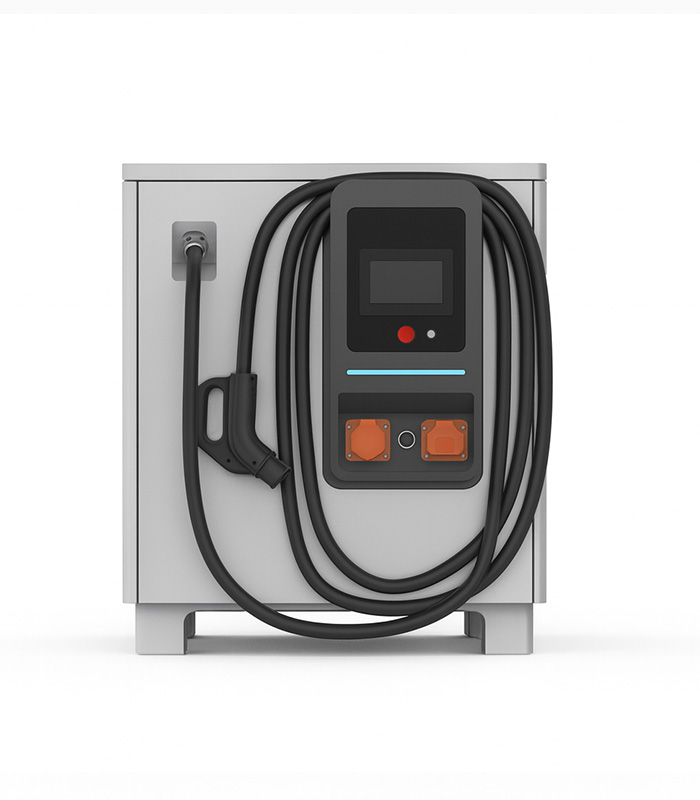
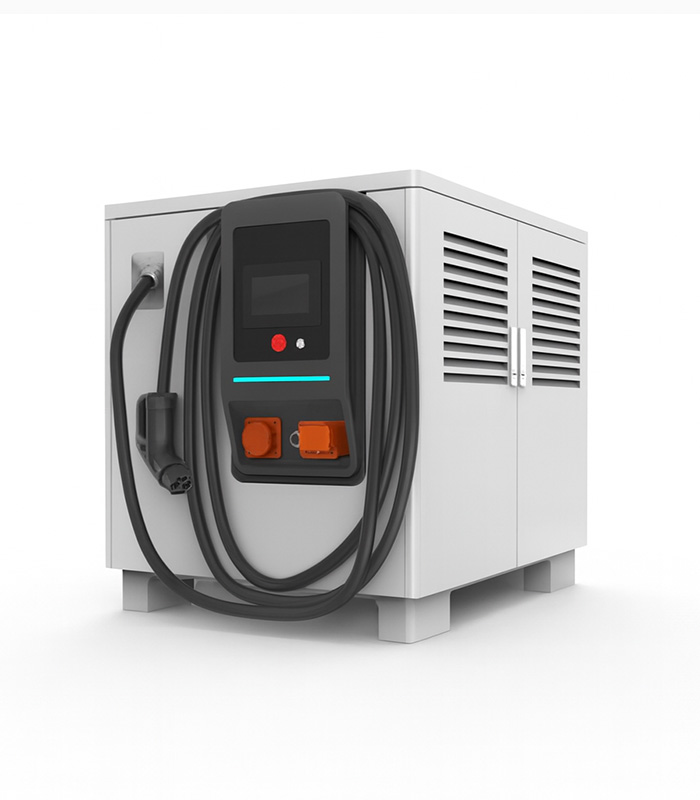
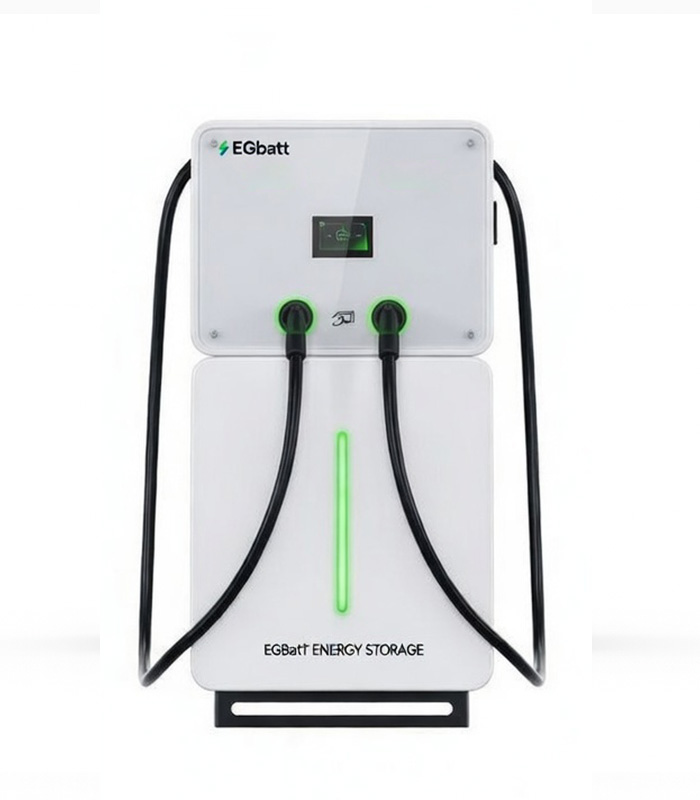
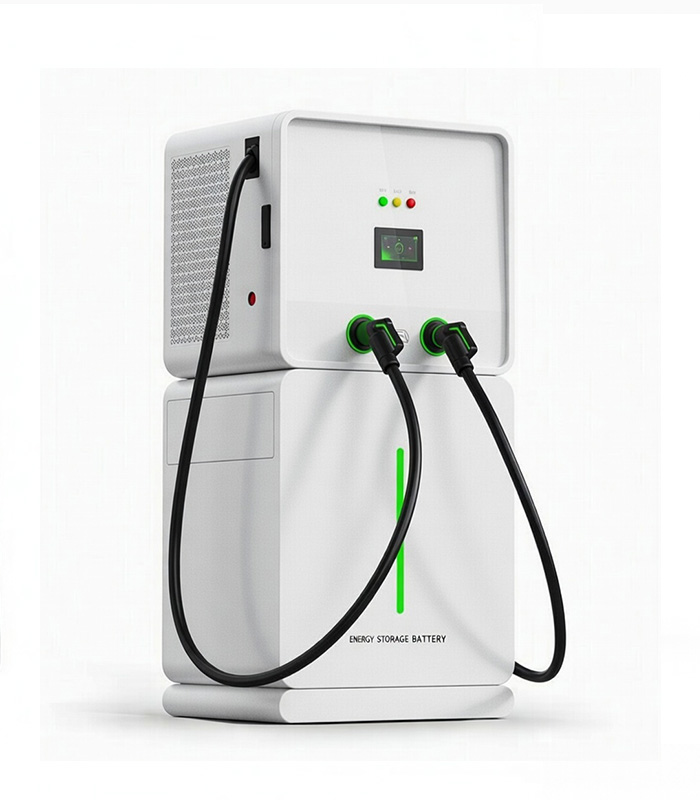
EGbatt's DC electric car chargers deliver high-speed charging for commercial applications -4:
Power range: 50kW to 150kW (scalable configurations)
Efficiency: >95% with advanced power conversion
Connector support: CCS, CHAdeMO, NACS (Tesla compatible)
Communication: OCPP 2.0.1 for seamless network integration
Protection: IP65-rated enclosures, over-voltage protection, temperature management
Applications: Retail centers, fleet depots, public charging stations, workplace charging
For commercial customers seeking energy independence, EGbatt's solar DC EV fast chargers offer unique advantages -4:
40kW output with dual MPPT inputs (260-720Vdc)
Direct PV-to-EV charging with >99% efficiency
Grid-independent operation for remote or off-grid sites
UL-ready certification with comprehensive safety protections
Ideal applications: Remote facilities, sustainability-focused campuses, off-grid fleet operations
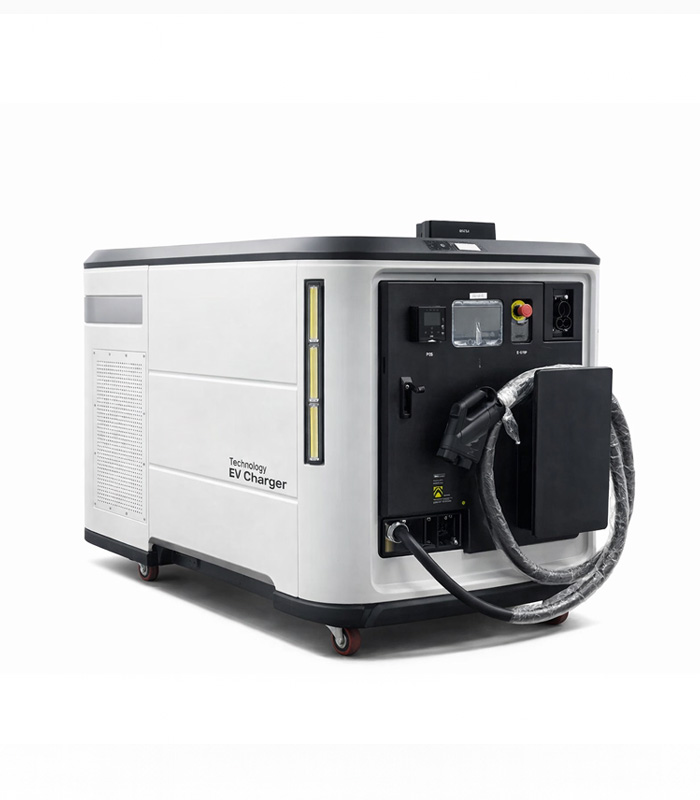
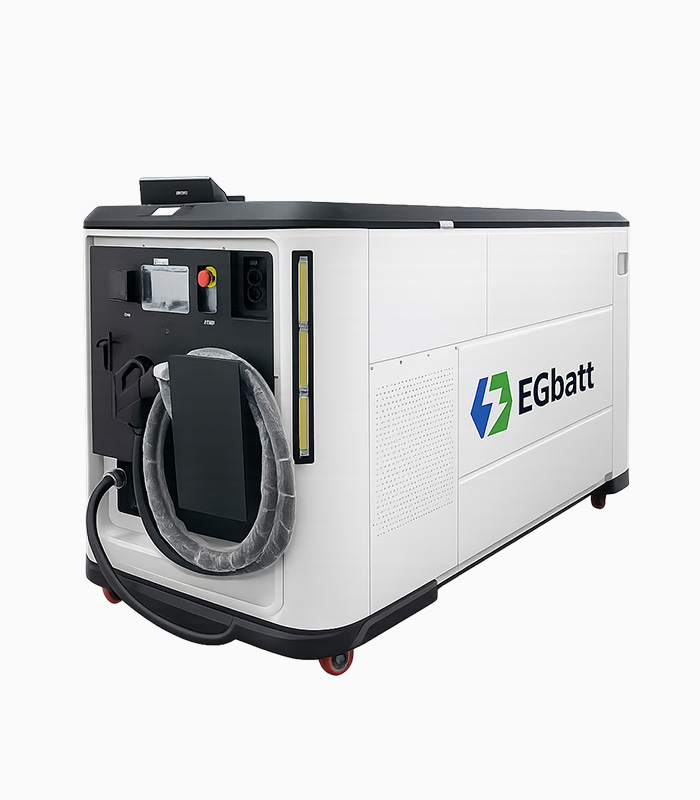
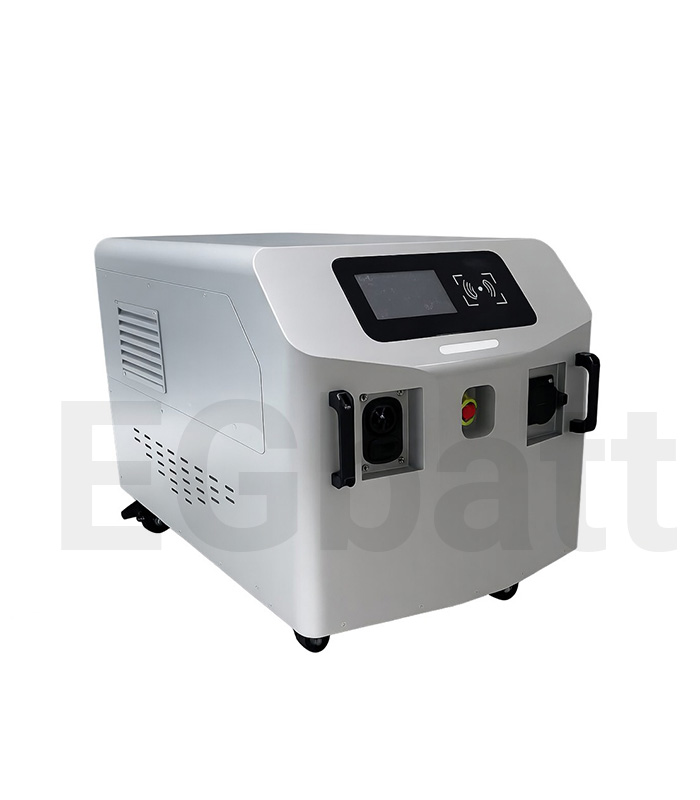
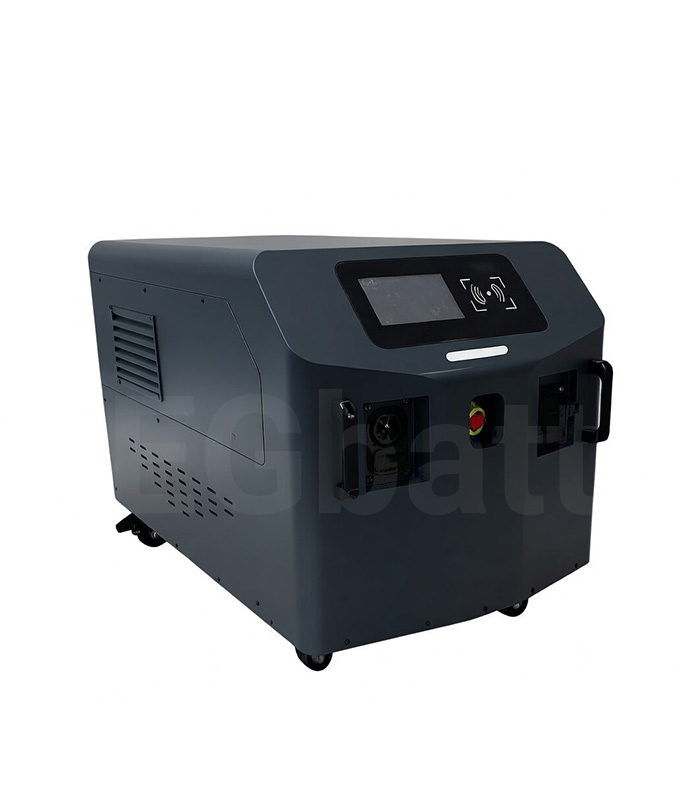
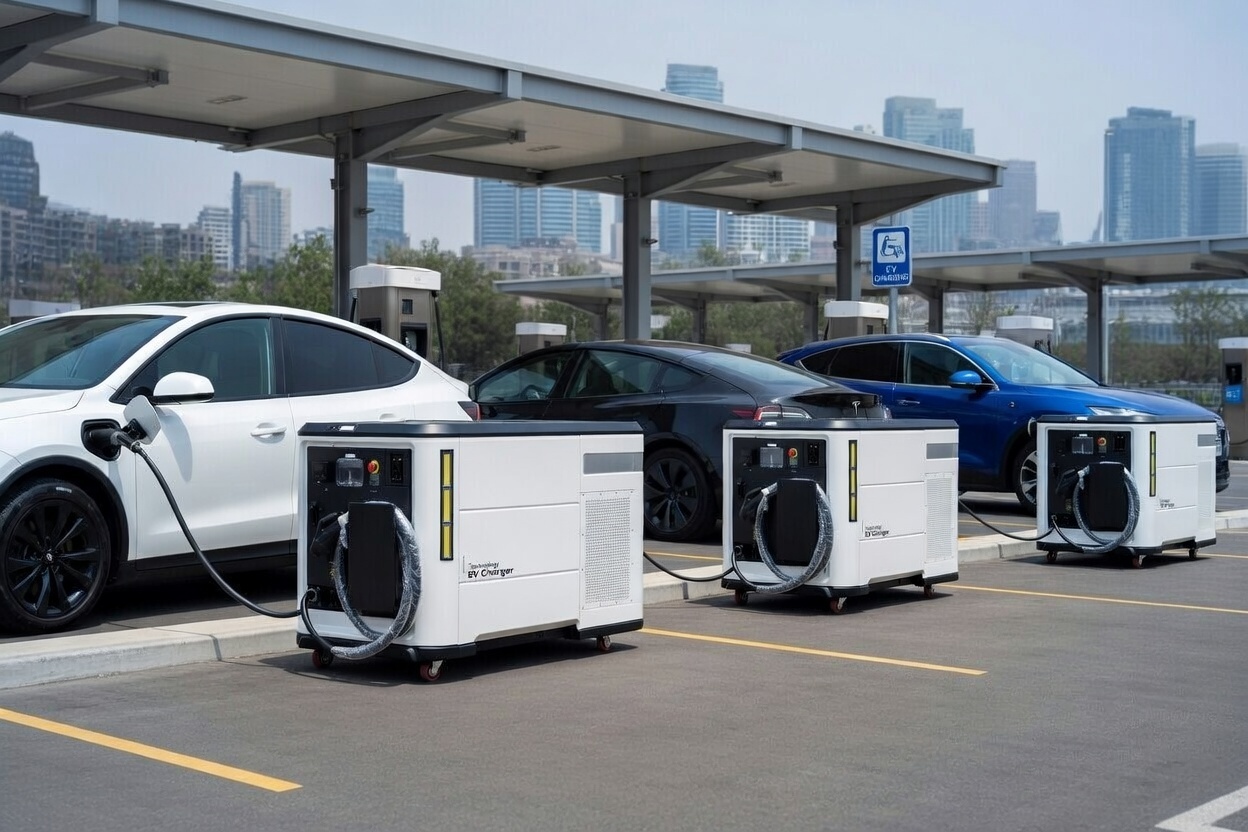
EGbatt's mobile DC fast chargers address the growing demand for flexible, deployable charging infrastructure -8:
| Model | Capacity | Output | Best Application |
|---|---|---|---|
| EGbatt iTrailer | 100-400kWh | Up to 180kW | Commercial fleets, events, temporary sites |
| EGbatt 65kWh/60kW Mobile | 65kWh | 60kW | Emergency response, remote operations |
| EGbatt 11.5kWh/20kW Portable | 11.5kWh | 20kW | Field service, roadside assistance |
All mobile units feature -8:
Lithium Iron Phosphate (LiFePo4) batteries with 6,000+ cycle life
Multi-protocol support (CCS1/CCS2, CHAdeMO, GB/T, Tesla)
Grid-independent operation with solar recharge capability
No permits or construction required for deployment
100% depth of discharge for maximum usable capacity
| 2026 Trend | EGbatt Solution |
|---|---|
| High-Quality Development | UL-certified, IP65-rated commercial chargers |
| Full Ultra-Fast Charging | 150kW DC fast chargers supporting 800V architecture |
| DC-Coupled Storage + Charging | Solar-integrated chargers with direct PV coupling |
| Modular Construction | Scalable iTrailer and mobile solutions |
| Campus Microgrids | Solar + storage + charging integrated systems |
| AI-Powered Networks | OCPP-compliant for smart energy management |
Retail and Shopping Centers: EGbatt's 50-150kW DC fast chargers attract EV-driving customers and capture the 20-30% increased spend associated with on-site charging .
Fleet Depots: The iTrailer mobile charging solution enables rapid fleet electrification without utility upgrades, supporting 100-400kWh capacity for overnight fleet charging .
Industrial Facilities: EGbatt's solar-integrated chargers provide energy independence and protection from grid volatility, with 40kW direct PV-to-EV capability .
Emergency Response: Mobile 65kWh/60kW units deliver rapid deployment for disaster relief and remote operations, with solar recharge capability for sustained off-grid operation .
Campus and Municipalities: Integrated microgrid solutions combine solar carports, battery storage, and EV charging for comprehensive energy management .
Conduct professional load calculation (per NEC Article 220)
Evaluate current peak demand and available capacity
Assess solar potential for on-site generation
Consult with local utility on interconnection requirements -4
Determine optimal charger mix (Level 2 vs. DC fast charging)
Size battery storage to match demand profiles
Model energy savings, revenue projections, and ROI
Identify applicable federal/state/local incentives
Submit permit applications to local authorities
Apply for NEVI funding, ITC credits, and state rebates
Ensure compliance with local codes and regulations
Work with licensed contractors (EVITP certification recommended) -4
Deploy chargers with proper electrical infrastructure
Install solar generation and battery storage (if applicable)
Configure OCPP-compliant network management
Monitor utilization and energy costs via management software
Implement dynamic load balancing for cost optimization
Analyze usage data to refine pricing strategies
Plan for scalability with more capacity for future expansion
Q: What is the ROI for commercial EV charging stations in 2026?
A: Payback periods typically range from 2-8 years depending on utilization, local electricity rates, and available incentives. Retail locations benefit from 20-30% increased customer spend, while fleet operators achieve significant fuel and maintenance savings .
Q: How much does a commercial DC fast charger cost?
A: 50kW-150kW DC fast chargers range from $20,000-$50,000 for equipment, plus $5,000-$20,000 for installation. EGbatt offers competitive pricing with solar-integrated options starting at approximately $4,000 for 40kW models.
Q: Can I install chargers with limited grid capacity?
A: Yes. DC-coupled storage solutions and solar integration enable high-power charging within existing grid limits. EGbatt's solar DC fast chargers and mobile iTrailer solutions operate independently of grid constraints .
Q: What incentives are available in 2026?
A: Federal ITC (30% for solar+storage), NEVI funding ($5 billion program), state rebates (up to $25,000+), and accelerated depreciation (MACRS). Specific amounts vary by location and project type.
Q: How long does installation take?
A: Simple Level 2 installations: 2-4 weeks. DC fast charging with grid upgrades: 3-6 months. Mobile solutions like EGbatt's iTrailer: deployable in minutes with no construction required .
Q: What maintenance is required?
A: Modern systems require minimal maintenance—primarily software updates, periodic inspections, and proactive monitoring. EGbatt's LiFePo4 batteries offer 6,000+ cycle life (10+ years) -4-8.
Q: Are EGbatt chargers compatible with all EVs?
A: Yes. EGbatt supports CCS1/CCS2, CHAdeMO, GB/T, and Tesla connectors with multi-protocol capability in all commercial chargers -4-8.
The evidence is clear: commercial EV charging infrastructure in 2026 is a high-ROI investment that delivers direct revenue, customer engagement, operational savings, and sustainability credentials . With the global market at USD 55.78 billion and growing at over 20% annually, early movers gain significant competitive advantages .
Huawei's 2026 trends underscore the importance of investing in future-ready technology—liquid-cooled ultra-fast charging, DC-coupled storage, AI-powered management, and microgrid integration . Commercial customers who deploy integrated solutions today will capture value for decades, while those who delay face higher costs and missed opportunities.
EGbatt delivers commercial-grade EV charging solutions engineered for 2026 and beyond. From 150kW DC fast chargers to solar-integrated systems and mobile iTrailer deployments, our products align with the latest industry trends and meet the rigorous demands of commercial applications .
Ready to evaluate commercial EV charging for your business? Contact EGbatt today for a complimentary site assessment, financial feasibility analysis, and customized solution design.
[Contact EGbatt Now] — Transform your parking assets into profit centers with 2026-ready commercial charging infrastructure.
Huawei 2026 Charging Network Industry Trends, China Energy News, January 2026 -1
Huawei 2026 Charging Network Ten Trends, Science and Technology Daily, January 2026 -5
The State of EV Charging: 2026 Industry Survey, BTC POWER -3
DC Electric Car Chargers: Fast Charging Stations for EVs from 50kW to 150kW, EGbatt, February 2026 -4
Mobile DC Fast Chargers: Portable EV Charging Solutions for On-the-Go, EGbatt, February 2026 -8
The ROI of Installing Commercial EV Chargers: What Australian Businesses Can Expect in 2026, EVSE Australia -7
Electric Vehicle Charging Station Market Report 2026-2031, Mordor Intelligence via GII Research -9
Megawatt Charging System Market Report 2026, Research and Markets
 Commercial Lithium BESSMinimalism