

Blog
How Many kW Solar Panels Do You Need to Charge an EV?

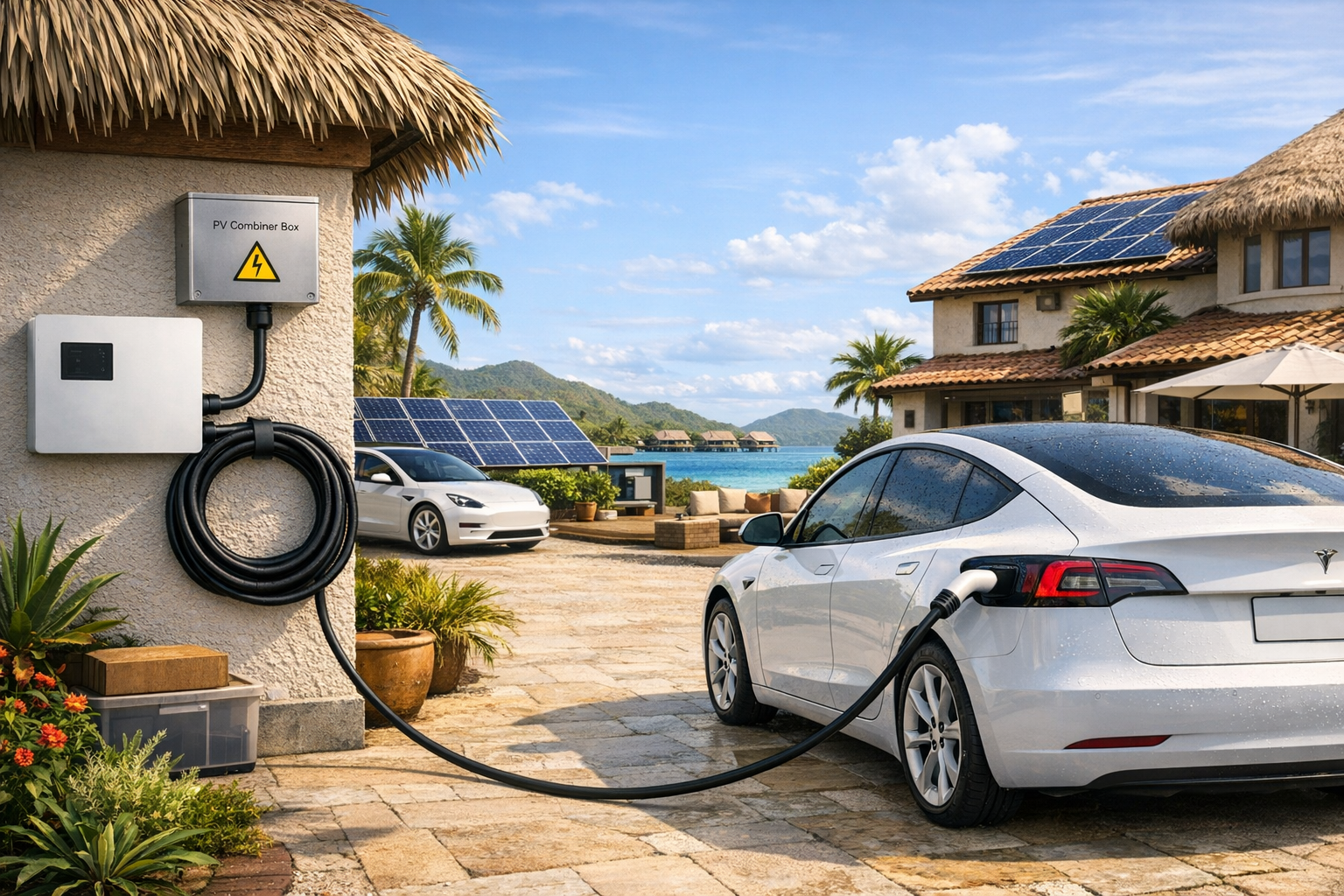
How Many kW Solar Panels Do You Need to Charge an EV?
One of the most common questions in solar EV charging is how large a solar system needs to be to fully charge an electric vehicle. The answer depends on several factors, including vehicle battery size, daily driving distance, sunlight availability, and system efficiency.
Unlike grid charging, solar EV charging is not a fixed input system. It is an energy generation and consumption balance problem.
—
1. Understanding EV Energy Consumption
To estimate solar requirements, we first need to understand how much energy an electric vehicle consumes.
On average, most electric vehicles consume between:
15–20 kWh per 100 km (62 miles)
This means that daily energy demand depends directly on driving distance.
For example:
- Daily driving: 50 km → ~7.5–10 kWh/day
- Daily driving: 100 km → ~15–20 kWh/day
- Daily driving: 150 km → ~22–30 kWh/day
—
2. Solar Panel Energy Production Basics
Solar panel output depends on system size and sunlight conditions.
On average, 1 kW of solar panels generates:
3–5 kWh per day (depending on location)
This is a critical factor in sizing a solar EV charging system.
—
3. Simple Solar EV Charging Calculation
We can estimate solar requirements using a simple formula:
Required Solar kW = Daily EV energy consumption ÷ Daily solar production per kW
For example, if an EV uses 20 kWh per day and 1 kW of solar produces 4 kWh per day:
20 ÷ 4 = 5 kW of solar panels
—
4. Real-World System Losses
In real-world systems, not all solar energy is usable due to conversion losses, temperature effects, and system inefficiencies.
Typical system efficiency ranges from:
70%–85%
This means actual solar system size should be increased accordingly.
—
5. Practical Solar System Sizing Examples
Light Driving (City Use)
- Daily usage: 10 kWh
- Required solar system: ~3–4 kW
Medium Driving (Daily Commute)
- Daily usage: 20 kWh
- Required solar system: ~5–7 kW
High Usage (Commercial / Fleet)
- Daily usage: 40–60 kWh
- Required solar system: ~10–15 kW+
—
6. Why Solar Alone Is Not Always Enough
While solar energy can significantly offset EV charging costs, it is not always sufficient as a standalone energy source.
Key limitations include:
- Solar is intermittent (day/night cycle)
- Weather affects energy output
- Peak charging demand may exceed generation
This is why many systems integrate battery storage or hybrid grid support.
—
7. Solar EV Charging System Configurations
7.1 Direct Solar Charging (Daytime Only)
EV is charged directly from solar during sunlight hours, with no storage.
7.2 Solar + Battery Storage System
Solar energy is stored in batteries and used for charging anytime.
7.3 Hybrid Solar + Grid System
Solar is primary source, grid acts as backup.
—
8. When Battery Storage Becomes Necessary
Battery storage becomes important when:
- Charging is required at night
- Energy demand is higher than solar production
- System requires stable output power
👉 Related system:
Battery Buffered EV Charging System
—
9. Off-Grid Solar EV Charging Scenario
In off-grid applications, solar system sizing must also account for energy autonomy and storage capacity.
These systems are commonly used in:
- Remote charging stations
- Industrial sites
- Fleet depots
- Temporary or mobile charging setups
👉 Example solution:
Off-Grid Mobile EV Charging System
—
10. Key Takeaway
The solar capacity required to charge an EV depends on energy consumption, sunlight availability, and system efficiency.
In most real-world scenarios, a 5–10 kW solar system can support daily EV commuting needs, while larger systems are required for commercial or fleet applications.
As solar EV charging technology evolves, system design is shifting toward integrated solutions that combine solar generation, energy storage, and intelligent power management.
