

Blog
DC-Coupled vs AC-Coupled EV Charging Systems

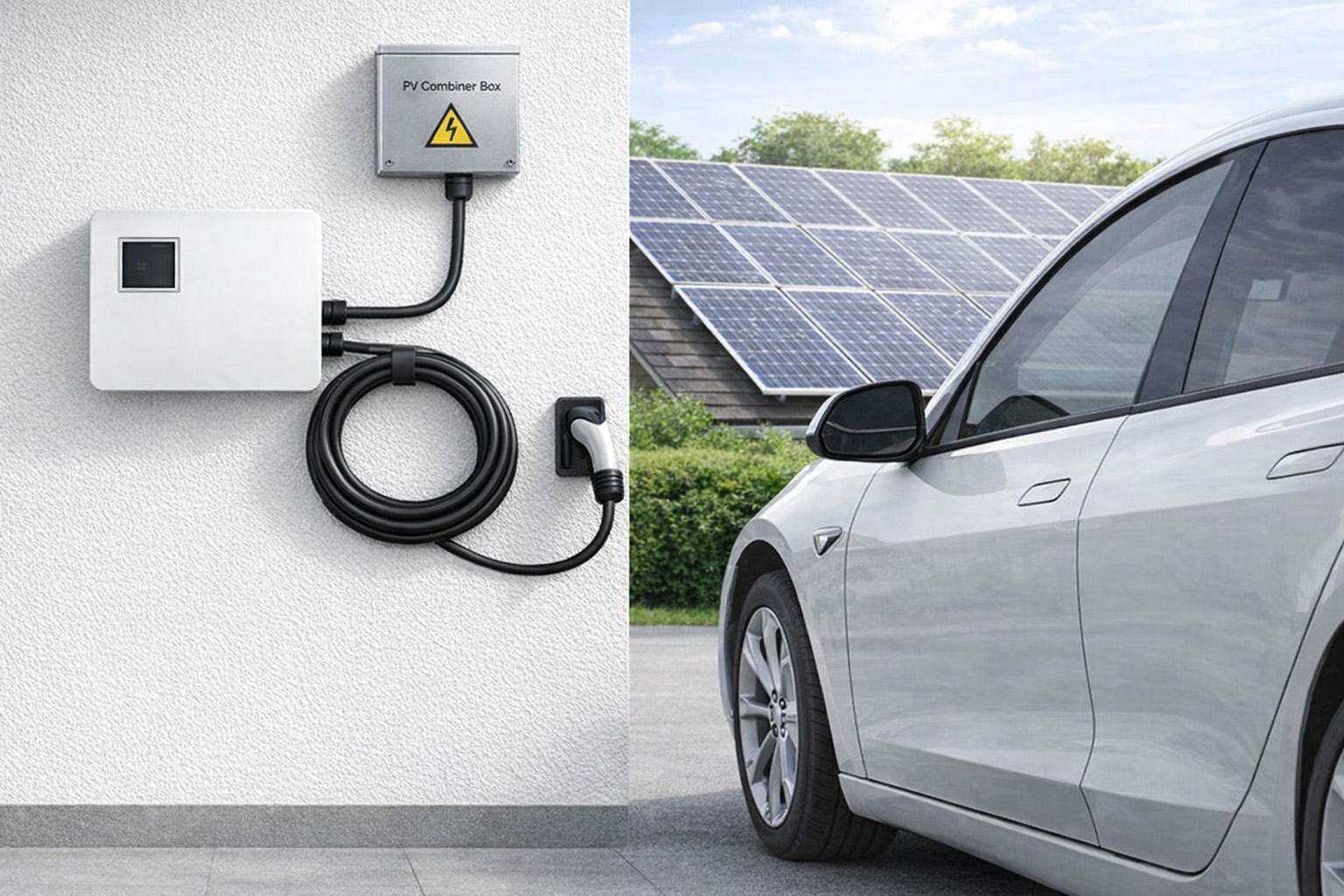
DC-Coupled vs AC-Coupled EV Charging Systems: Architecture, Efficiency and Real-World Applications
Electric vehicle charging systems are evolving beyond traditional grid-based architectures. As solar energy, battery storage, and EV infrastructure increasingly converge, system design choices such as AC-coupled and DC-coupled architectures play a critical role in efficiency, scalability, and energy optimization.
Instead of focusing only on equipment-level products, modern EV charging infrastructure is increasingly designed as an integrated energy system combining photovoltaics, power electronics, and energy storage.
—
1. EV Charging System Architecture Overview
At a system level, EV charging infrastructure can be categorized based on how electrical energy flows between generation, conversion, and storage.
The two dominant architectures are AC-coupled systems and DC-coupled systems.
- AC-coupled architecture: energy is distributed through alternating current infrastructure
- DC-coupled architecture: energy remains in direct current form across most conversion stages
—
2. AC-Coupled Charging and Power Conversion Path
In AC-based EV charging systems, energy from solar or grid sources typically undergoes multiple conversion stages before reaching the EV battery.
This introduces additional power electronics components such as inverters and onboard rectifiers, which increase system complexity.
Typical energy flow:
PV generation → DC/AC inverter → AC distribution → EV charger → onboard AC/DC conversion → battery storage
—
3. DC-Coupled Charging and Direct Energy Flow
DC-coupled EV charging systems simplify the energy pathway by minimizing unnecessary AC conversion stages.
This architecture is widely used in modern solar-integrated charging systems and microgrid-based EV infrastructure.
Typical energy flow:
PV generation → DC/DC power conversion → EV battery charging
—
4. Power Electronics Efficiency and Conversion Losses
In power system engineering, every conversion stage introduces energy losses due to switching, thermal dissipation, and conversion inefficiencies.
AC-coupled systems typically involve multiple AC/DC and DC/AC conversions, while DC-coupled systems reduce these stages significantly.
This difference becomes more significant in high-power EV charging environments where energy throughput is large and continuous.
—
5. Solar Integration in EV Charging Systems
Photovoltaic systems naturally generate direct current electricity, which makes DC-based architectures inherently more compatible with solar energy.
In AC-based systems, solar energy must first be inverted into alternating current before being used for EV charging or battery storage.
DC-coupled systems reduce this conversion requirement, improving solar utilization efficiency and simplifying system design.
—
6. Battery Storage and DC Microgrid Integration
Modern EV charging infrastructure increasingly integrates battery energy storage systems to manage peak demand, improve stability, and support off-grid operation.
DC-coupled architectures allow solar generation, battery storage, and EV charging to operate within a shared DC bus system, improving energy coordination.
This is particularly relevant for:
- Microgrid EV charging systems
- Solar carport charging infrastructure
- Commercial fleet charging depots
- Weak-grid and off-grid applications
👉 Related system concept:
battery-buffered EV charging system architecture
—
7. EV Charging Use Cases by Architecture Type
AC-Coupled Applications
- Residential EV charging systems
- Existing building retrofits
- Low-power charging stations
- Grid-stable urban environments
DC-Coupled Applications
- Solar-powered EV charging infrastructure
- Off-grid charging stations
- Commercial fleet electrification
- High-efficiency energy systems
👉 Off-grid application example:
mobile EV charging system for off-grid deployment
—
8. Emerging Trends in EV Charging System Design
The evolution of EV charging is increasingly influenced by three major trends:
- Higher penetration of renewable energy sources
- Integration of distributed energy storage systems
- Growth of DC-native electrical infrastructure
These trends are driving a gradual shift toward DC-based system architectures in large-scale EV charging deployments.
—
9. System-Level Comparison Summary
- AC systems rely on centralized grid-based energy conversion
- DC systems reduce conversion stages and simplify power flow
- AC remains dominant in residential applications
- DC is increasingly used in solar and commercial infrastructure
- Hybrid systems are becoming common in modern deployments
—
Final Perspective
The selection between AC-coupled and DC-coupled EV charging systems is no longer a purely hardware decision. It is now a system-level energy architecture decision that affects efficiency, scalability, and renewable energy utilization.
As EV charging infrastructure evolves toward higher integration with solar energy and battery storage systems, DC-based architectures are becoming increasingly relevant in modern energy system design.
