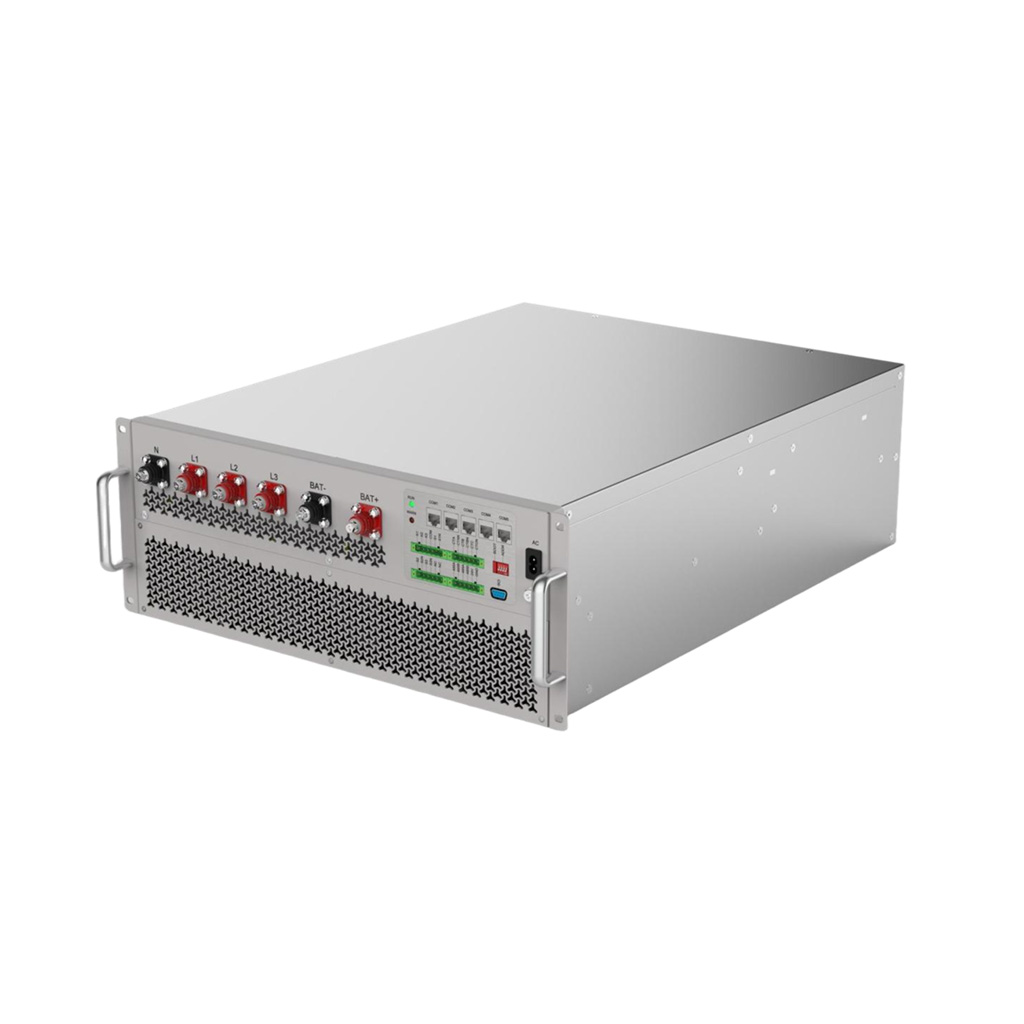
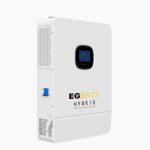
100kW 125kW 380V/220V Three Phase Power Conversion System bidirectional

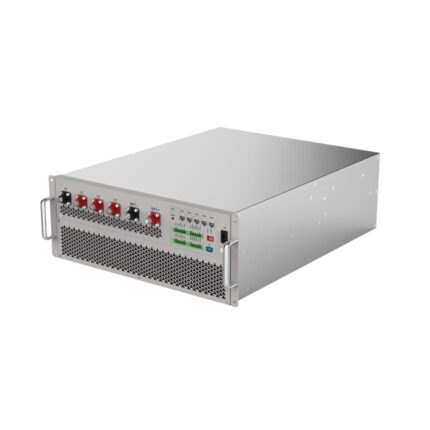
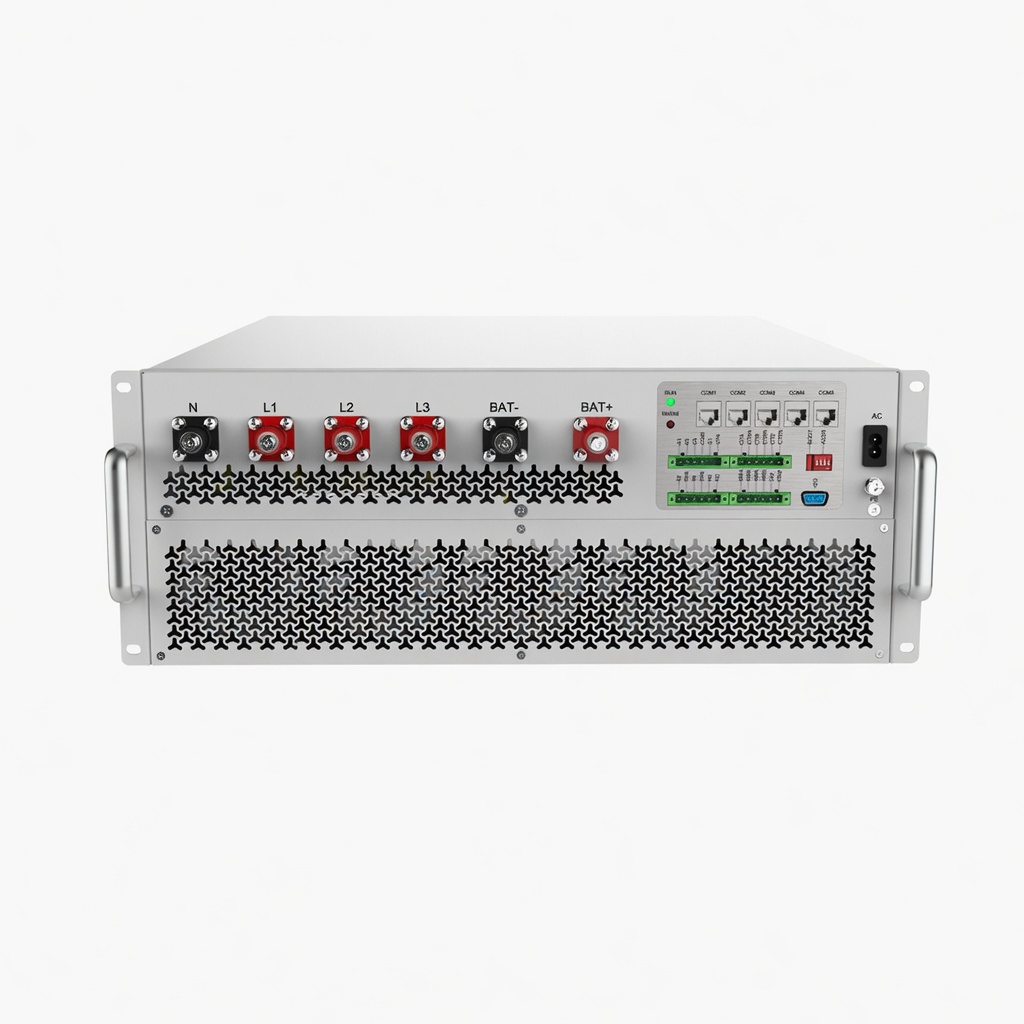
The EGbatt-125kW Power Conversion System (PCS) is an advanced bidirectional energy storage inverter engineered for commercial and industrial applications worldwide. This versatile system seamlessly converts between DC and AC power, supporting both 380V three-phase (international/Asian markets) and 480V three-phase (North American markets) configurations from the same hardware platform.

Designed for grid-tied operation, off-grid microgrids, solar-plus-storage systems, and hybrid diesel-generator applications, the EGbatt-125kW delivers exceptional performance with 98.5% peak efficiency, sub-20ms charge/discharge transitions, and comprehensive power quality management.

Description

EGbatt-125kW 380V/400V/415V Bidirectional BESS Inverter

High-Density Power Conversion Module for Global Industrial & Commercial Energy Storage
The EGbatt-125kW Power Conversion System (PCS) is a high-performance, low-voltage (LV) energy storage inverter engineered specifically for global 380V, 400V, and 415V three-phase grid networks. Operating natively at 50Hz and 60Hz, this transformerless 3-level NPC module provides a robust bidirectional bridge for Battery Energy Storage Systems (BESS) in manufacturing plants, commercial complexes, telecom hubs, and island microgrids.
Beyond standard energy arbitrage, the EGbatt-125kW acts as a comprehensive power quality conditioner. It integrates Active Harmonic Filtering (AHF) and Static Var Generator (SVG) capabilities to solve severe industrial grid pollution, while its 3-Phase 4-Wire (3P4W) topology guarantees stable 220V/230V single-phase power during off-grid or weak-grid conditions.
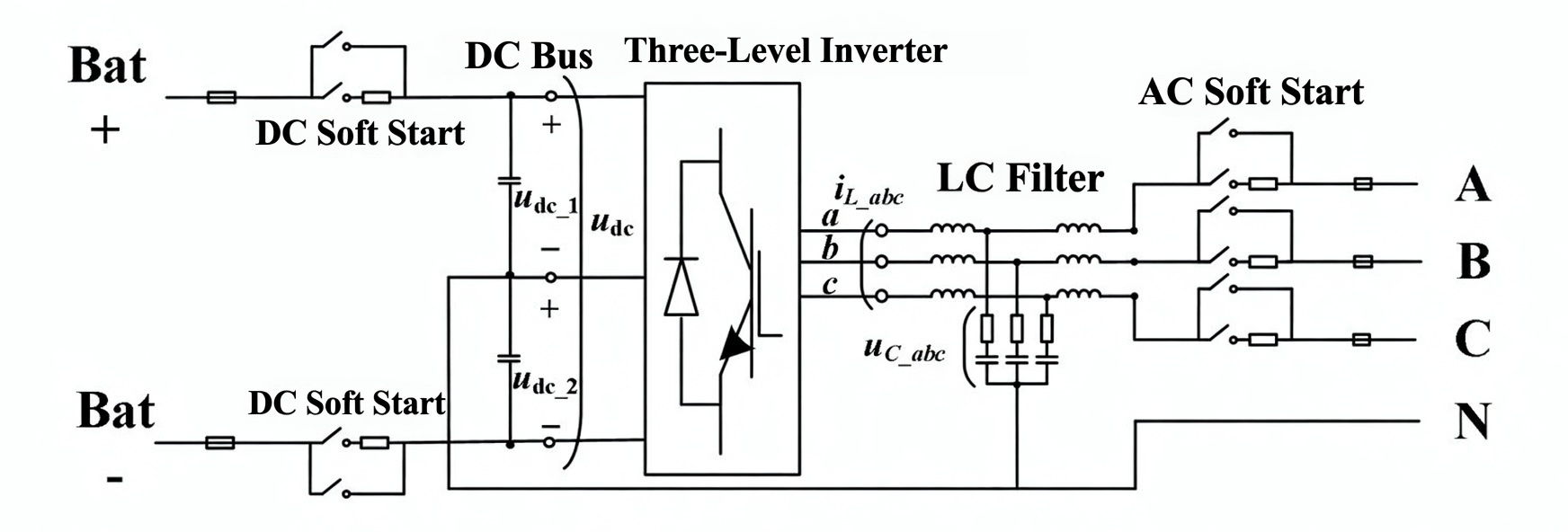
Electrical schematic diagram 125kw pcs
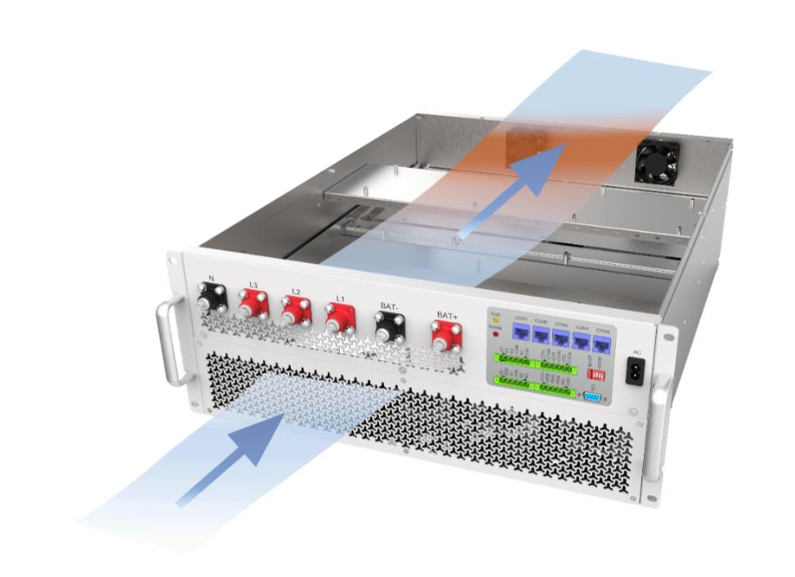
Electrical schematic diagram
Global Grid Compatibility: 380V/400V/415V & IEC Standards

Unlike systems designed exclusively for North American grids, the EGbatt-125kW is built from the ground up to meet the rigorous demands of European, Asian, African, and Oceanian LV distribution networks.
Universal LV Voltage Support: Auto-adapts to 380V (Asian/African standard), 400V (European standard), and 415V (UK/Australian standard) via firmware configuration.
50Hz/60Hz Dual-Frequency Architecture: Optimized control loops for both 50Hz and 60Hz grid environments without hardware modification.
IEC & EN Grid Code Alignment: The hardware and firmware architecture is designed to support the functional requirements of EN 50549, VDE-AR-N 4110 (Germany), G99 (UK), CEI 0-21 (Italy), and AS/NZS 4777 (Australia).
Safety & EMC Design Foundation: Engineered in accordance with IEC 62109-1/-2 (Safety of power converters) and IEC 61000-6-2/4 (Industrial EMC immunity and emission) standards.

cooling

Industrial Power Quality: Active Harmonic Filtering & Unbalance Compensation

Industrial facilities with heavy machinery, welding equipment, and variable frequency drives (VFDs) suffer from severe power quality degradation. The EGbatt-125kW eliminates the need for separate, expensive compensation equipment by integrating advanced power conditioning directly into the BESS inverter.

Active Harmonic Filter (AHF) Mode

The PCS dynamically tracks and injects compensating currents to cancel out low-order harmonics (up to the 50th order) generated by non-linear industrial loads. This maintains the Point of Common Coupling (PCC) Current Total Harmonic Distortion (THDi) below 3%, preventing transformer overheating and capacitor bank failures.

Static Var Generator (SVG) & Reactive Power Support

Operating in full 4-quadrant mode, the inverter provides step-less reactive power compensation (from -1 capacitive to +1 inductive). This ensures a Power Factor (PF) > 0.99 at the utility meter, completely eliminating utility penalty charges for reactive power consumption.

Three-Phase Load Unbalance Mitigation

In facilities with uneven single-phase load distribution, the EGbatt-125kW independently controls the output current of each phase (L1, L2, L3). It actively balances the grid-side currents, preventing neutral wire overloading and reducing distribution line losses.

Parameter Category Technical Specification
Model Information
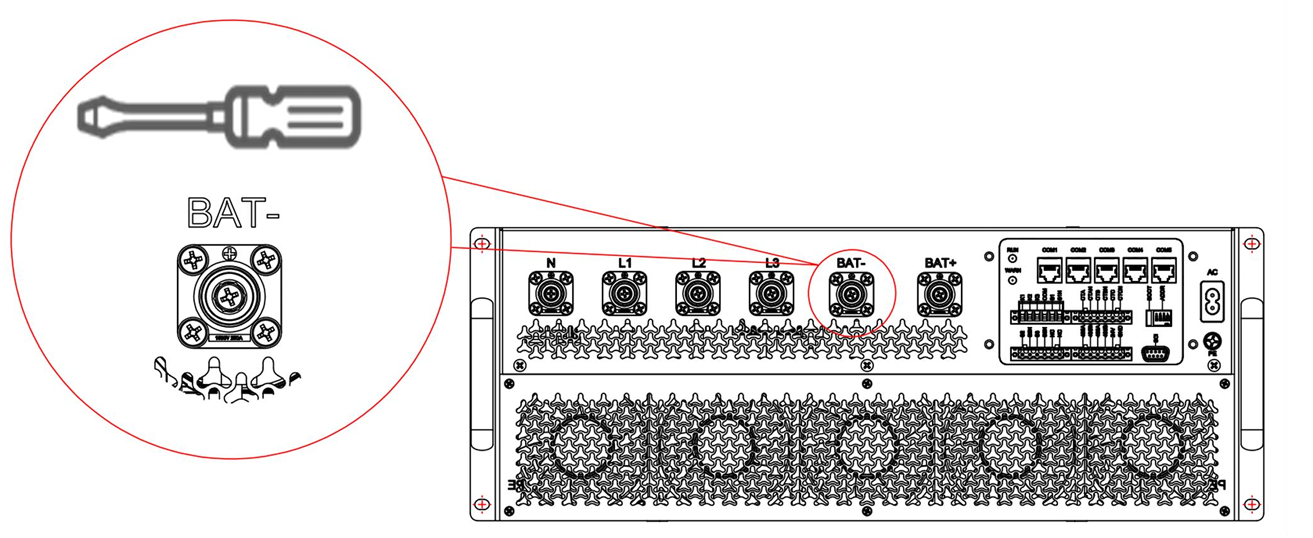
Model Number EGB-PCS125-L2M-3 (Front Wiring) / EGB-PCS125-L2M-B3 (Rear Wiring)
DC Parameters
DC Voltage Range 580~950V (3-Phase 3-Wire)
630~950V (3-Phase 4-Wire)
Maximum DC Current 210A
Voltage Regulation Accuracy ≤ ±1%
Current Regulation Accuracy ≤ ±1%
AC Parameters (Grid-Tied)
Rated Power 125kW
Allowable Grid Voltage 380V / 400V (-15% ~ +15%)
Maximum AC Current 190A
Allowable Grid Frequency 45~55Hz / 55~65Hz
Power Factor > 0.99 (at rated power)
Power Factor Adjustment Range -1 (leading) ~ +1 (lagging)
DC Component Injection < 0.5% (of rated AC current)
Current Total Harmonic Distortion (THDi) < 3% (at rated power)
Full-Power Charge/Discharge Transition < 20ms
110% Overload Max Operating Time 10 min
120% Overload Max Operating Time 1 min
AC Parameters (Off-Grid)
Off-Grid AC Voltage 380V / 400V ±15%
Off-Grid AC Frequency 50Hz / 60Hz
AC Voltage Control Accuracy < 1%
AC Voltage Unbalance Ratio < 2%
Off-Grid Output Voltage THD < 3% (supports non-linear loads)
General & Mechanical Parameters
Wiring Configuration Front / Rear wiring optional (two distinct models)
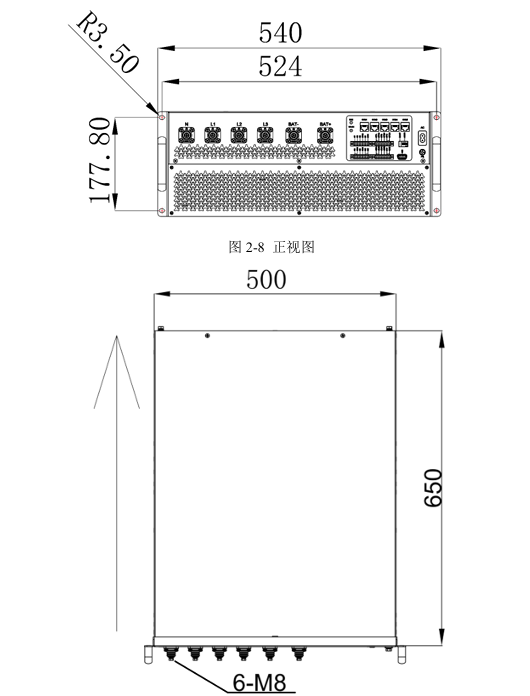
Dimensions (W×D×H, mm) Front Wiring: 500 × 650 × 200
Rear Wiring: 500 × 680 × 200
Net Weight Front Wiring: 50kg
Rear Wiring: 53kg
Isolation Method Transformerless
Grid Support Functions L/HVRT, Active/Reactive Power Control
Protection Rating IP20
Max Conversion Efficiency 98.5%
Airflow Rate Front Wiring: 720 CFM
Rear Wiring: 769 CFM
Noise Level ≤ 65dB
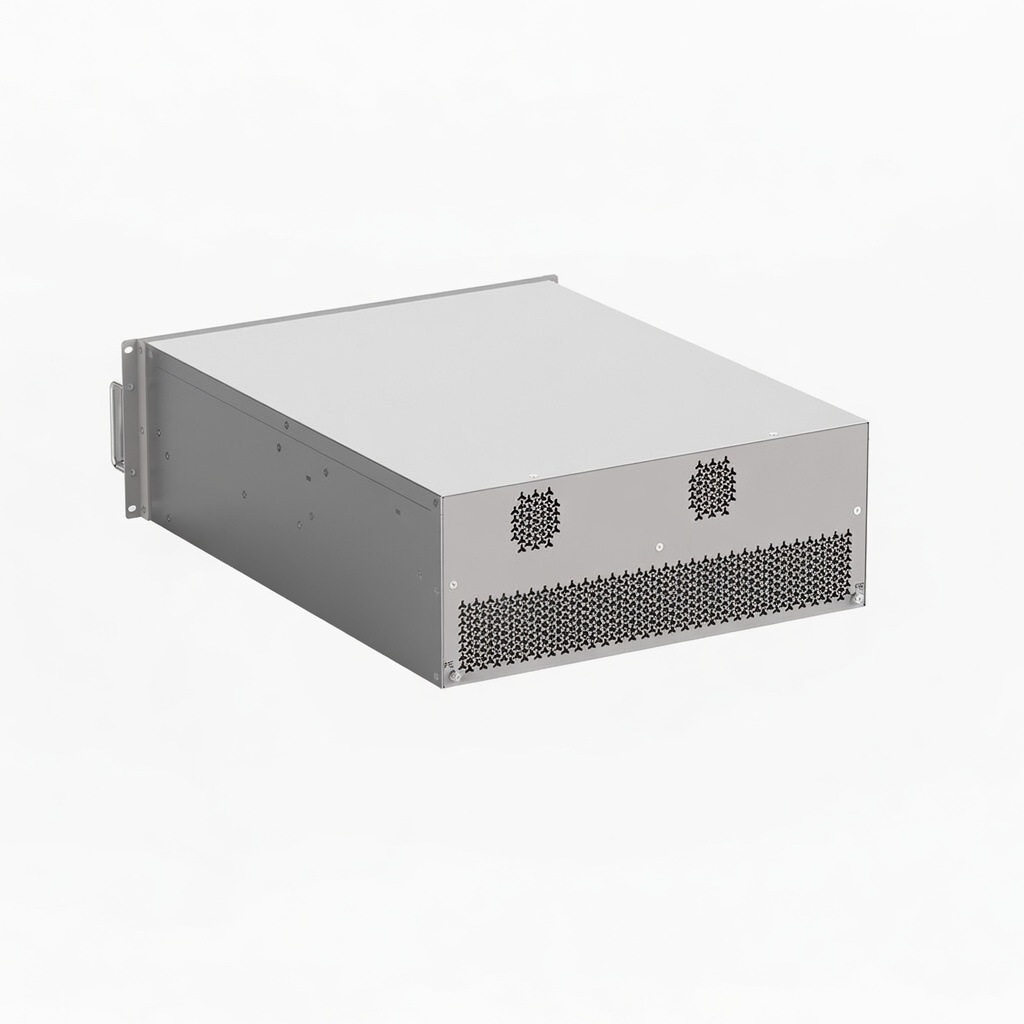
Cooling Method Intelligent Forced-Air Cooling
MTBF (Mean Time Between Failures) ≥ 100,000 hours
Operating Temperature Range -25℃ ~ 60℃ (derating required > 45℃)
Humidity 0 ~ 95% RH (non-condensing)
Max Operating Altitude 3000m (derating required > 3000m)
Communication & Integration
Communication Interfaces RS485, CAN
Communication Protocols Modbus RTU, CAN 2.0
BMS Integration Supported (Compatible with 20+ mainstream protocols)

3-Phase 4-Wire (3P4W) Off-Grid & Diesel Genset Hybridization

In regions with unreliable utility grids or frequent load shedding, the ability to form a stable off-grid network is critical.

True 3P4W Off-Grid Voltage Formation

While many 380V inverters only support 3-wire (Delta) off-grid output, the EGbatt-125kW supports 3-Phase 4-Wire (3P4W) topology. This creates a stable neutral point, allowing the system to power standard 220V/230V single-phase equipment (lighting, HVAC, IT servers) directly during blackouts, with voltage unbalance strictly maintained at < 2%.

Seamless Diesel Generator Replacement & Hybridization

  • Virtual Synchronous Generator (VSG): The inverter mimics the inertia and droop characteristics of traditional diesel gensets, providing crucial short-circuit current support for protective relay coordination in islanded microgrids.
  • Genset Synchronization: Through dry-contact and Modbus integration, the PCS can auto-synchronize with existing diesel generators, managing load-following and allowing the diesel engine to operate only at its most fuel-efficient sweet spot, or shutting it down entirely when battery SoC is sufficient.
  • Weak Grid SCR Support: Capable of stable grid-tied operation in ultra-weak grids with a Short Circuit Ratio (SCR) as low as 2.0, preventing nuisance tripping in remote industrial parks.
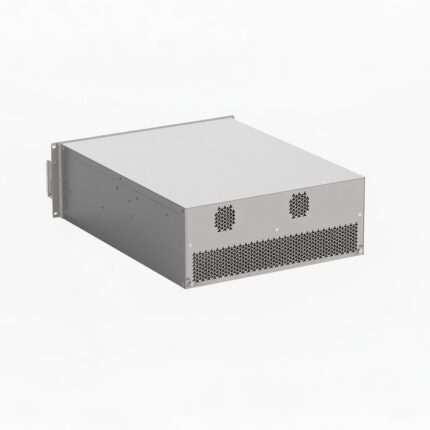
size

VPP-Ready Architecture & Smart Grid Integration

As global energy markets transition toward decentralized aggregation, the EGbatt-125kW is equipped with the computational edge required for Virtual Power Plant (VPP) participation.

  1. Sub-10ms Dispatch Response: Meets the stringent latency requirements of primary frequency response (PFR) and fast frequency reserve (FFR) markets.
  2. Standardized IEC 61850 & Modbus TCP Readiness: While native RS485/CAN is standard, the internal DSP architecture supports high-speed Ethernet gateways for direct integration with regional VPP aggregators and utility SCADA systems.
  3. Advanced BMS Handshake: Pre-loaded with CAN/RS485 protocol dictionaries for major global LFP and Sodium-ion battery manufacturers, ensuring precise SoC/SoH estimation and dynamic current limiting to maximize battery cycle life.

Derating & Environmental Robustness

The EGbatt-125kW is validated for extreme global deployment environments, from high-altitude mining sites to tropical coastal manufacturing hubs.
Thermal Derating: 100% continuous load up to +45°C. Linear derating applies up to +60°C ambient, ensuring zero thermal shutdowns during peak summer demand.
Altitude Compensation: Rated for 3000 meters above sea level (ASL). Advanced dielectric clearance and thermal algorithms allow safe operation in high-altitude regions (e.g., Andes, Himalayas) with minimal capacity loss.
Conformal Coating: Internal PCBAs feature heavy-duty conformal coating to resist sulfurization, salt spray, and high humidity (up to 95% RH non-condensing), critical for Southeast Asian and African deployments.

connection

Target Global Application Scenarios

Manufacturing Plant BESS (Europe/Asia): Arbitrage on dynamic Time-of-Use (ToU) tariffs while simultaneously acting as an Active Harmonic Filter for CNC machines and robotic welding cells.
Telecom & Data Center Backup (Africa/Middle East): Replacing lead-acid batteries and diesel generators with high-density LFP systems, utilizing 3P4W off-grid mode to maintain 230V server rack power during daily grid collapses.
Island & Remote Microgrids (Oceania/Caribbean): Providing grid-forming voltage and frequency reference (VSG mode) for 100% renewable penetration, stabilizing the grid against passing cloud cover on solar arrays.
Commercial Complex Peak Shaving (Australia/UK): Avoiding network capacity upgrade charges by buffering EV fast-charging stations and HVAC peak loads, compliant with G99/AS4777 export limitations.

Contact us

    Frequently Asked Questions

    Q: Can this 125kW inverter output 220V single-phase power during a blackout?
    Yes. When configured in 3-Phase 4-Wire (3P4W) mode, the EGbatt-125kW establishes a solid neutral point. This allows you to connect standard 220V/230V single-phase loads (like lighting and office equipment) between any phase and the neutral, even when completely disconnected from the utility grid.

    Q: Does the system support VDE-AR-N 4110 or G99 grid codes?
    The hardware architecture and DSP control loops are designed to meet the stringent low-voltage ride-through (LVRT), rate-of-change-of-frequency (RoCoF), and anti-islanding requirements of VDE-AR-N 4110 (Germany) and G99 (UK). Specific regional grid parameter files (country files) can be flashed via the RS485 port during commissioning.

    Q: How does the Active Harmonic Filter (AHF) function work alongside battery charging?
    The EGbatt-125kW utilizes its remaining current capacity for harmonic compensation. For example, if the battery is charging at 80A, and the inverter's total RMS current capacity is 190A, the remaining capacity is dynamically allocated to inject anti-phase harmonic currents, cleaning the facility's power quality without interrupting the BESS charging cycle.

    Q: Is an external isolation transformer required for 380V/400V grids?
    No. The EGbatt-125kW utilizes a transformerless 3-level NPC topology, which significantly reduces footprint, weight, and conversion losses (achieving 98.5% efficiency). However, if local regulations or specific battery grounding schemes mandate galvanic isolation, an external 50Hz/60Hz low-frequency transformer can be easily integrated on the AC side.

    Q: Can it operate in parallel with a 380V diesel generator without a grid connection?
    Yes. The PCS supports Droop Control and Virtual Synchronous Generator (VSG) modes. This allows multiple EGbatt units, or a mix of EGbatt units and diesel generators, to share active and reactive loads proportionally in an isolated microgrid without relying on a master-slave communication cable, ensuring high system redundancy.

    Q: Can the EGbatt-125kW PCS operate without a third-party EMS (Energy Management System)?
    A: Yes, absolutely. The EGbatt-125kW is designed for maximum integration flexibility. While it seamlessly integrates with advanced EMS platforms via Modbus TCP/RTU, it can also operate independently in the following modes:
    Grid-Forming (V/f Control): In off-grid or microgrid applications, it acts as the main voltage and frequency reference, automatically balancing loads without external dispatch.
    PLC / Smart Meter Integration: Industrial users can easily control the PCS using their existing PLCs or smart relays via standard Modbus RTU (RS485) for simple peak-shaving, anti-islanding, or zero-export logic.
    Local Constant Power/Current Mode: Engineers can set fixed charge/discharge profiles locally for testing or specific industrial processes.
    We provide complete Modbus Register Maps, PLC sample code, and CAN protocol dictionaries to help your engineering team build custom control logic without relying on a proprietary EMS.

    Shipping & Delivery

    Shipping Notice

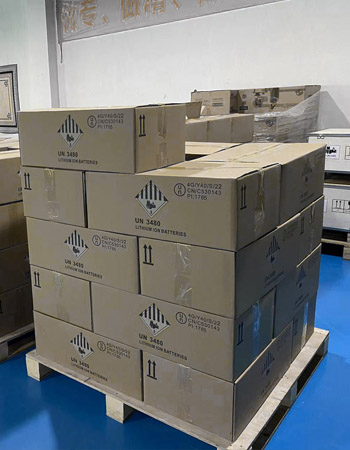
    EGBATT has set a high standard for shipping lithium batteries. As lithium ion batteries fall under DG (dangerous goods) category, they use high-quality DG boxes or DG wooden cases to pack the batteries along with thick foam. This ensures that the batteries are delivered to customers in the best possible condition and without any damage.

    We accept shipping

    • By express or Air shipping like UPS, DHL, Fedex.
    • Shipping by sea to port or to door service.
    • FAC to Customer's forwarder company in China.

    EGBATT ensures that all of its batteries meet the MSDS and UN38.3 standards. The packaging requirements for lithium batteries shipped by sea depend on the Watt-hour rating for lithium ion cells or batteries, or the lithium metal content for lithium metal cells or batteries. The packaging needs to meet UN specifications or be strong and rigid packing that can withstand the shocks, mechanical handling, and loading encountered during transport.

    Shipping Regulation

    If you are an international customer, please note that products will be shipped directly from China. To place your order, please contact odmbattery@outlook.com manually, rather than ordering on the website, as shipping costs may be inaccurate for regions outside of the USA.

    EGbatt understands the importance of proper handling and regulation compliance when it comes to shipping lithium ion batteries. We take great care to follow all regulations for sea and air shipping to ensure the safe and secure transport of these potentially hazardous materials.

    Shipping lithium ion batteries comes with specific guidelines outlined by transportation authorities, including the International Air Transport Association (IATA) and the International Maritime Dangerous Goods (IMDG) code, to minimize the risk of fire or explosion during shipping. These guidelines cover packaging, labeling, and documentation requirements, among other things. At EGbatt, we stay up-to-date with all current regulations and guidelines to ensure we are shipping our products safely and responsibly. We understand the risks involved with transporting lithium ion batteries and take the necessary precautions to minimize those risks for both our customers and our employees.